Free games, simulations and toolkits on marketing, strategy, finance, sustainability, employability, research skills and disability inclusion. Lecturers, trainers and workshop leaders can run them with a group, and students, learners and professionals can play every game and simulation solo. I design and build them independently, test them in real classes, and share them for anyone to use and adapt, with credit.
28 games14 simulations3 toolkits and tools92 guides1 live brief board1 subject bite0 logins needed
Each one turns a lecture idea into decisions students make: in teams on the classroom screen, on their own in their own time, or on a real problem from a real organisation.
Global goalsTap a UN Sustainable Development Goal to see the games that tackle it. Everything in the Lab supports Goal 4, Quality education (target 4.4: skills for work).
Showing all
Play solo: students and learners, on your own phone or laptop. Run in class: a built-in team mode for one classroom screen. Use in class or Run a workshop: put it on the big screen and play it together, following the step-by-step plan in the teacher’s guide.
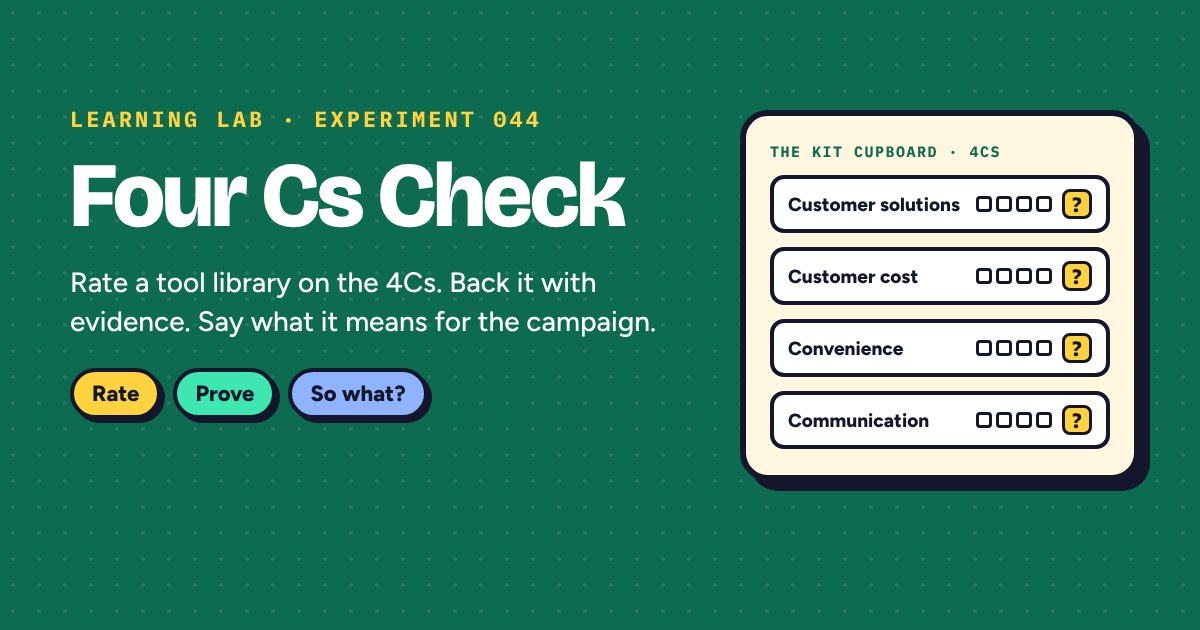
Swap the 4Ps for the 4Cs. Rate a community tool library on customer solutions, customer cost, convenience and communication, pick the strongest evidence for each rating, and decide what it means for a campaign.
Solo, or in pairs in class8–12 min solo (15–30 in class)Analysis practice
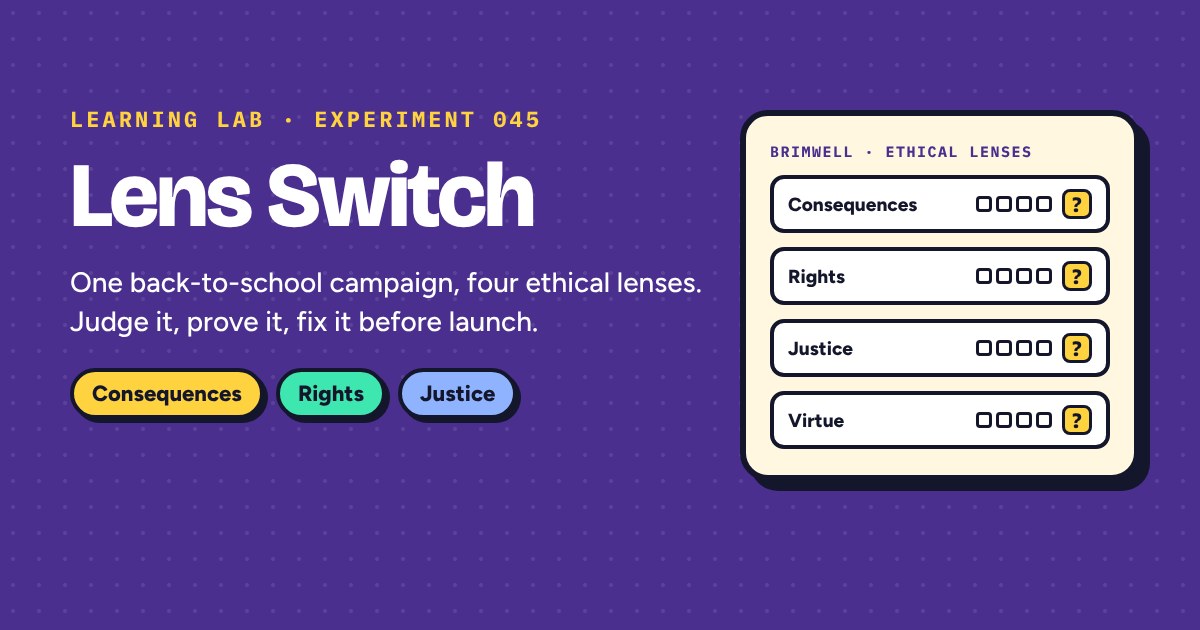
One back-to-school campaign, four ethical lenses. Judge a bottle brand's plan on consequences, rights, justice and virtue, back each judgement with evidence, and decide what to change before it launches.
Solo, or in pairs in class8–12 min solo (15–30 in class)Ethics practice
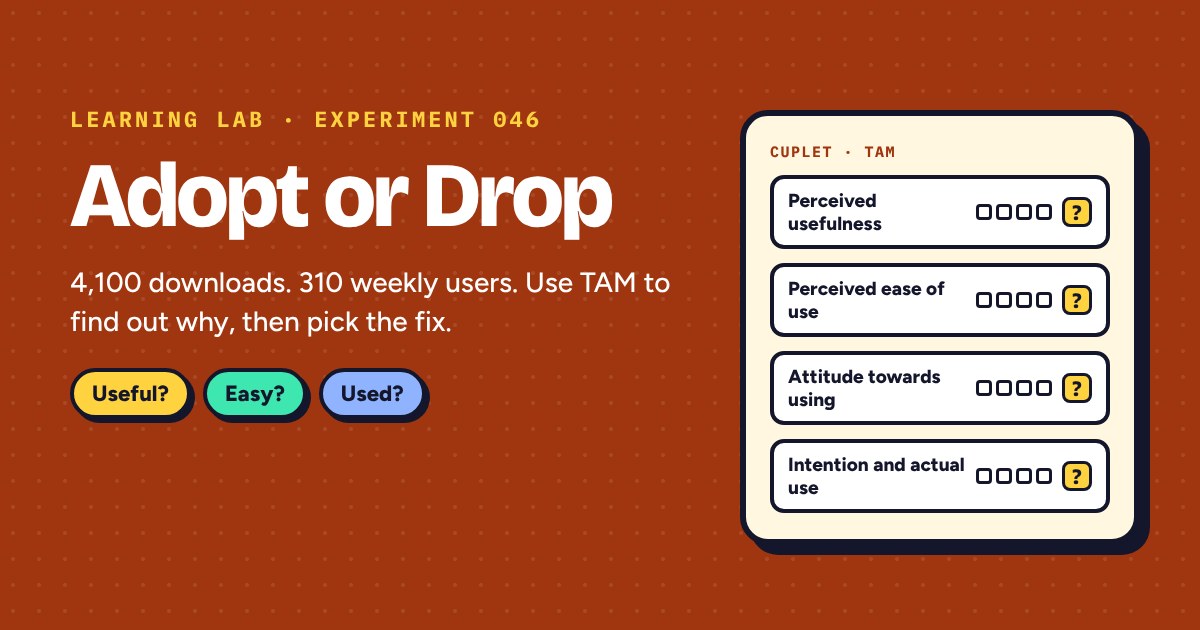
4,100 downloads, 310 weekly users. Use the Technology Acceptance Model to diagnose a reusable-cup app: rate usefulness, ease of use, attitude and actual use, then pick the fix that will change behaviour.
Solo, or in pairs in class8–12 min solo (15–30 in class)Diagnosis practice
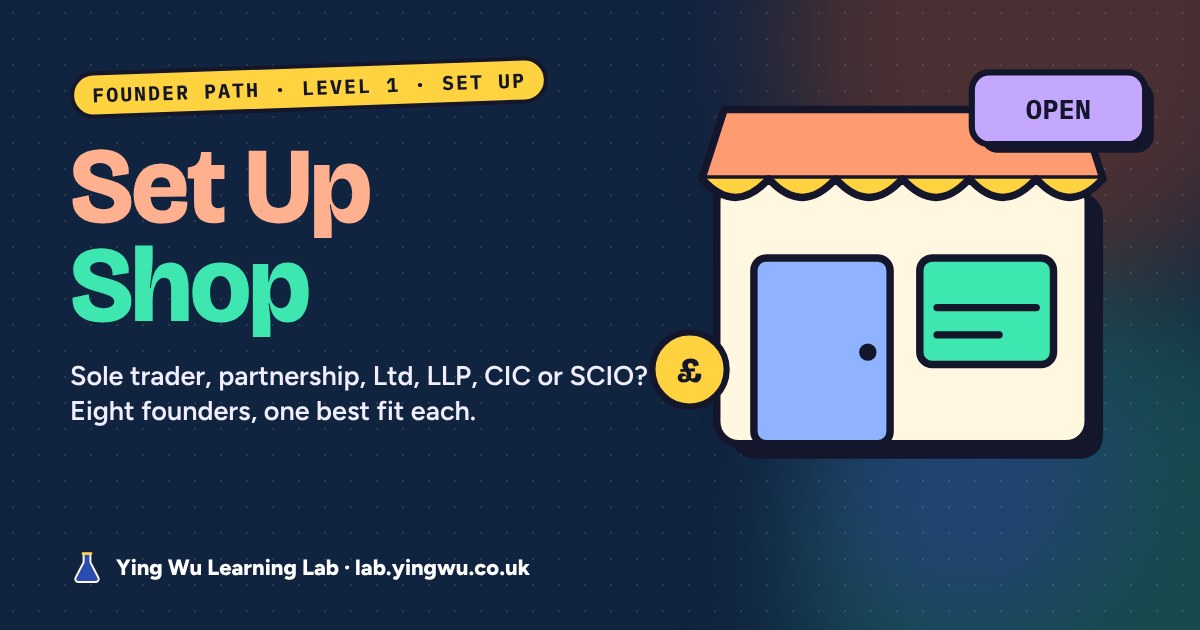
Eight founders, one best legal form each: sole trader, partnership, Ltd, LLP, CIC or SCIO. Liability, tax, paperwork and plans, with UK rules and where Scotland differs.
Live in class or solo12–25 min2 to 6 teams or just you
Register Company ABC Ltd step by step, in the same order as the Companies House form: name, address, directors, ID checks, PSCs, shares and articles. Then plan the first year’s deadlines.
Live in class or solo12–25 minUpdated for 2026 fees
Eleven founders, eleven funding problems. Match each to bootstrapping, a Start Up Loan, invoice or asset finance, angels and SEIS, venture capital, crowdfunding or a grant, and learn what the money really costs.
Live in class or solo12–25 min2 to 6 teams or just you
Company ABC has £40,000 and twelve months. Hire, take a big order, borrow, register for VAT, market and price, and watch the cash line move. Land the year without running out.
Swap seats: you’re the angel. Six start-ups pitch for your £50,000. Use three due-diligence checks, get the SEIS rules right, build a portfolio, then see five years, and 2,000 more futures, play out.
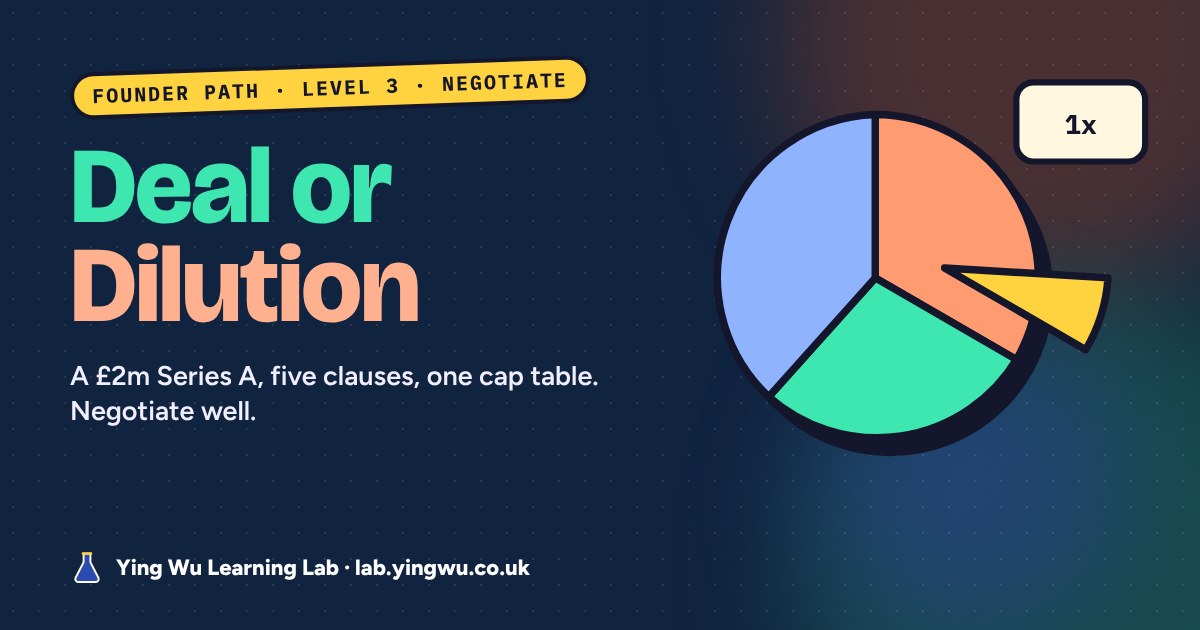
VC Fund XYZ offers £2 million. Negotiate valuation, liquidation preference, option pool, anti-dilution, board and vesting, watch the cap table change, then sell the company and see who gets what.
Live in class or solo15–20 minCap table and waterfall
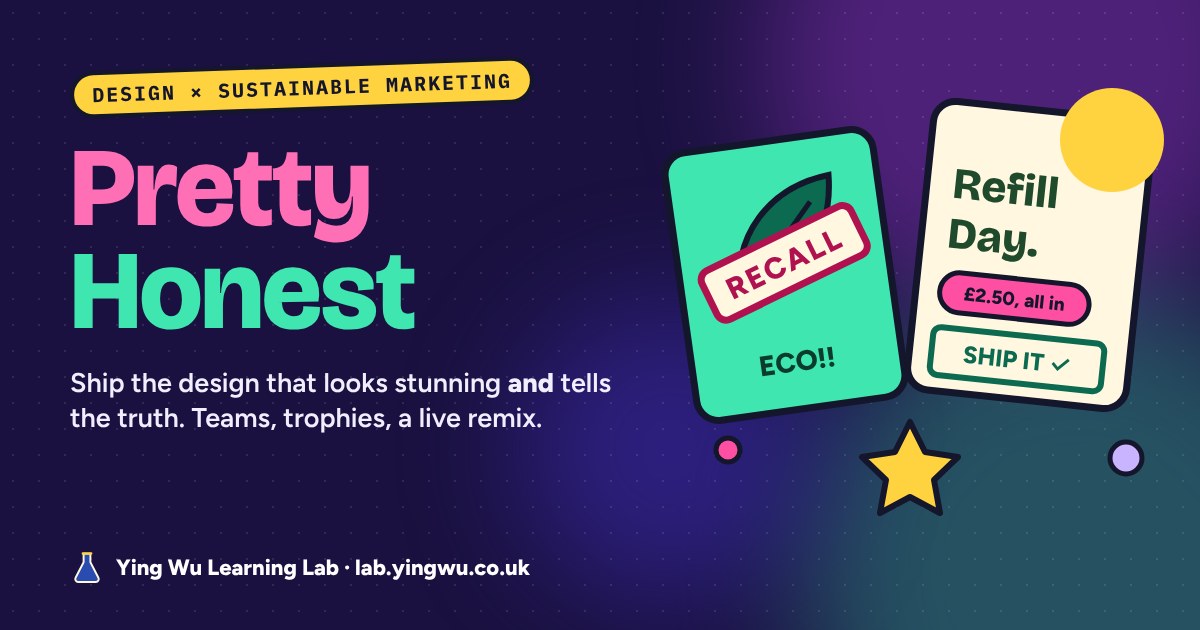
Eight design calls for a pack, a post, a poster and a web page, each in three versions. Ship the one that looks stunning and tells the truth, then remix a greenwashed poster against the clock. Podium and trophies.
Live in class or solo12–20 min2 to 6 teams or just you
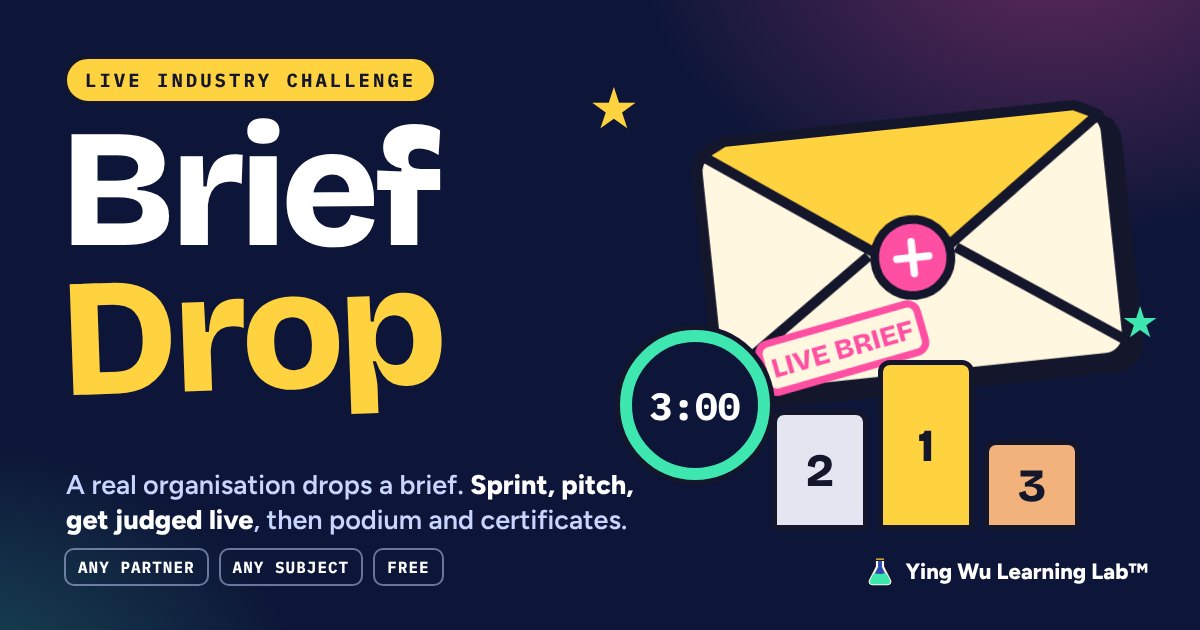
A real organisation drops a live brief. Teams sprint with a pitch canvas, survive a twist and pitch to a guest judge who scores them on a phone. Podium reveal and printable certificates for the top three. Any partner, any subject.
Live in class or solo30 min to 2 h in class · 10–15 solo2 to 10 teams or just you
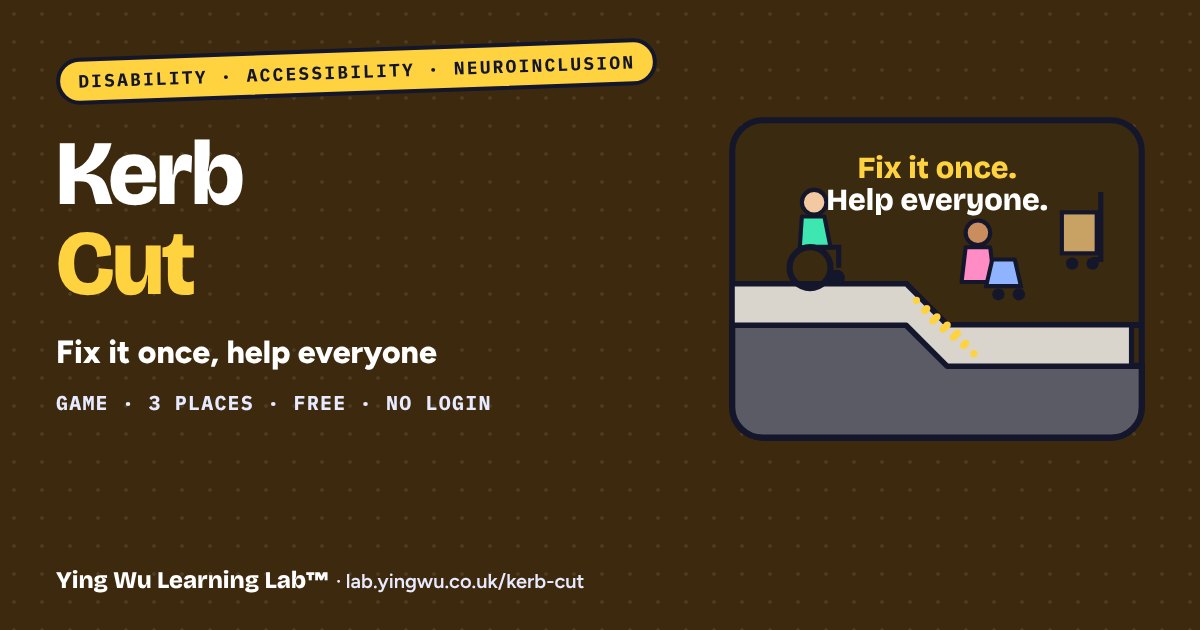
Walk through a shop, a café and a community open day. Spot the barriers, choose fair fixes, and watch how many people each fix helps: the kerb-cut effect.
Live in class or solo8–25 minWhole class or just you
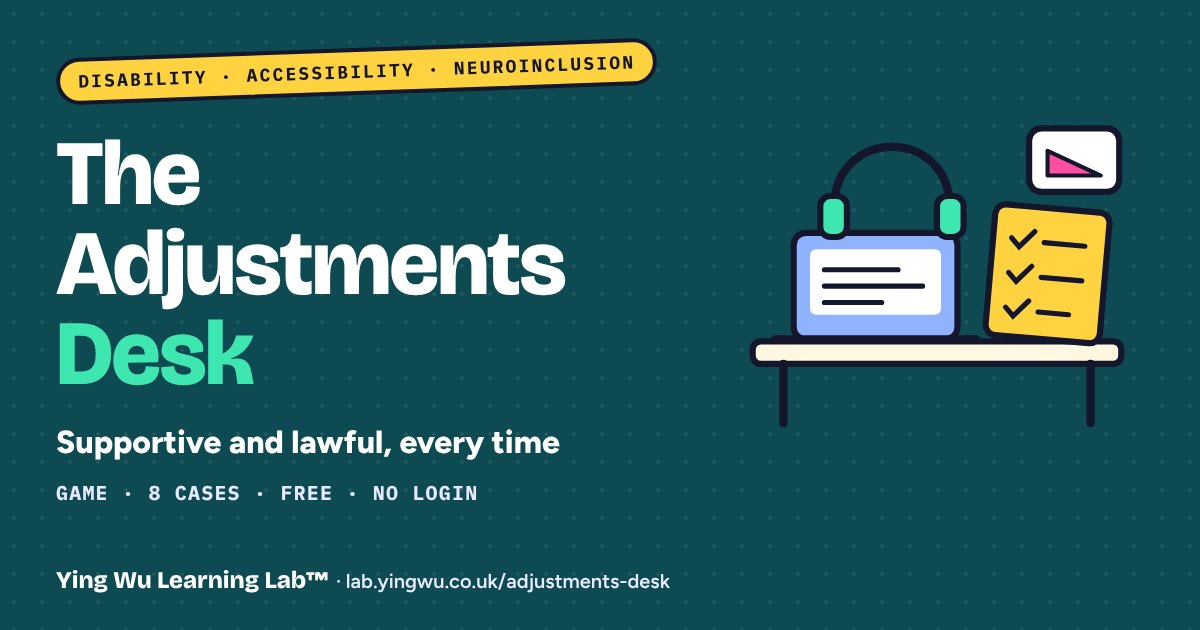
Eight requests land on your desk at work and university: dyslexia, autism, a fluctuating condition, mental health, mobility. Find the reply that is both supportive and lawful.
Live in class or solo10–30 min2–4 teams or just you
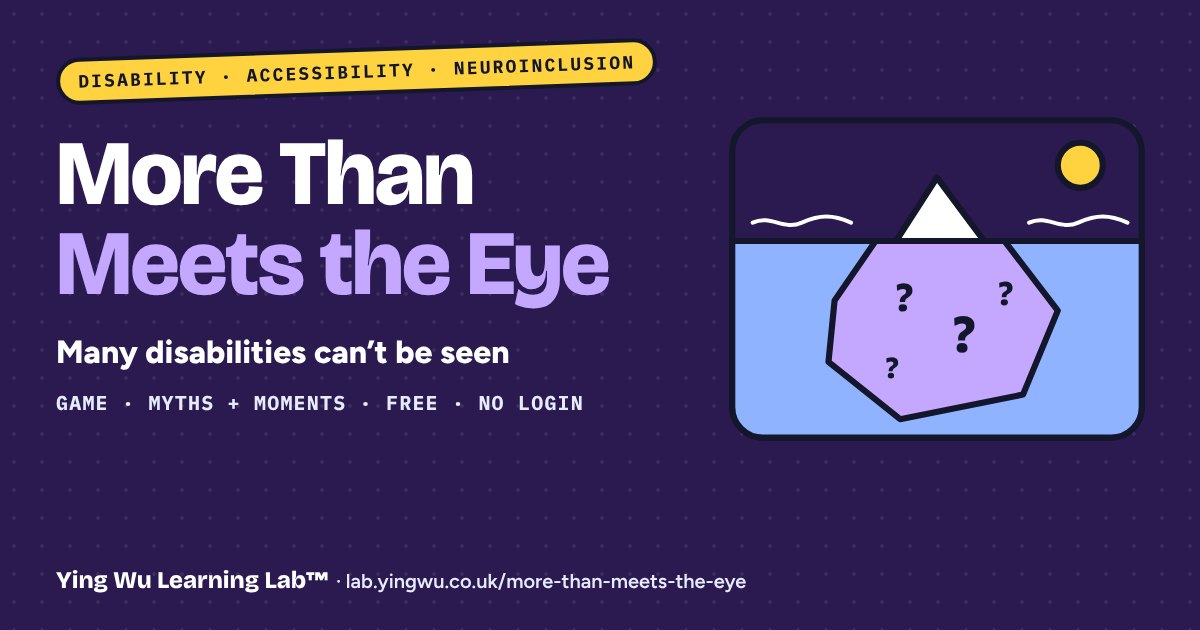
Many disabilities can’t be seen. Bust twelve myths about non-visible and fluctuating conditions and the law, then choose the right words in five everyday moments.
Live in class or solo6–25 min2–4 teams or just you
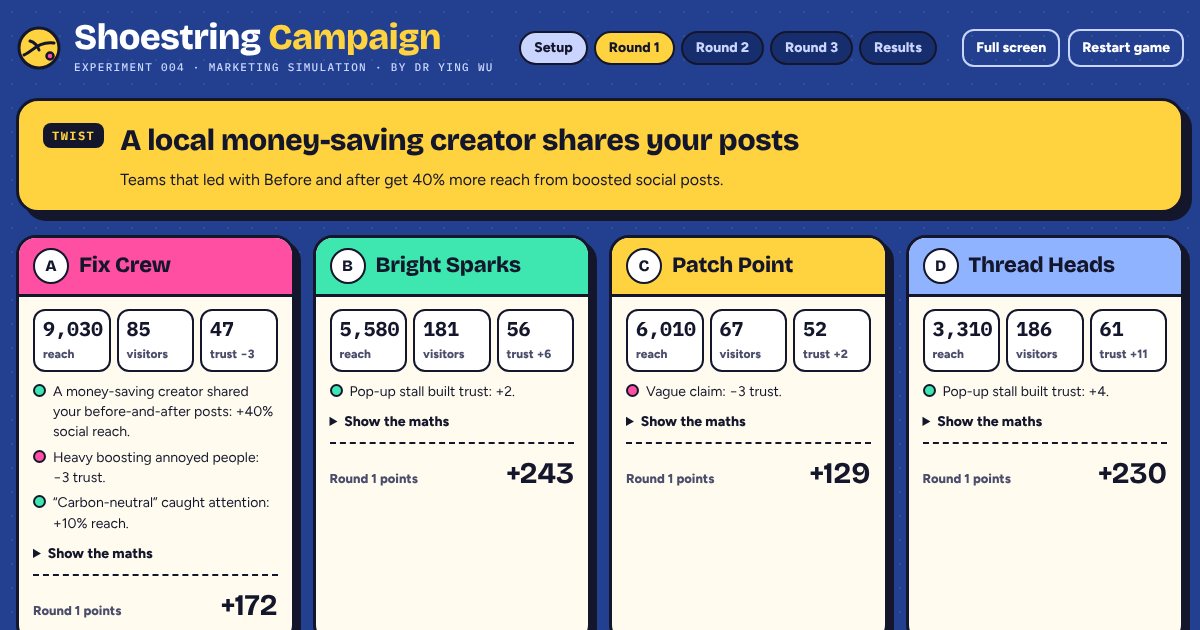
Run a small charity's campaign on a tiny budget: split it across five channels, pick a green claim and survive the twist. Play in class, or solo against three rival agencies.
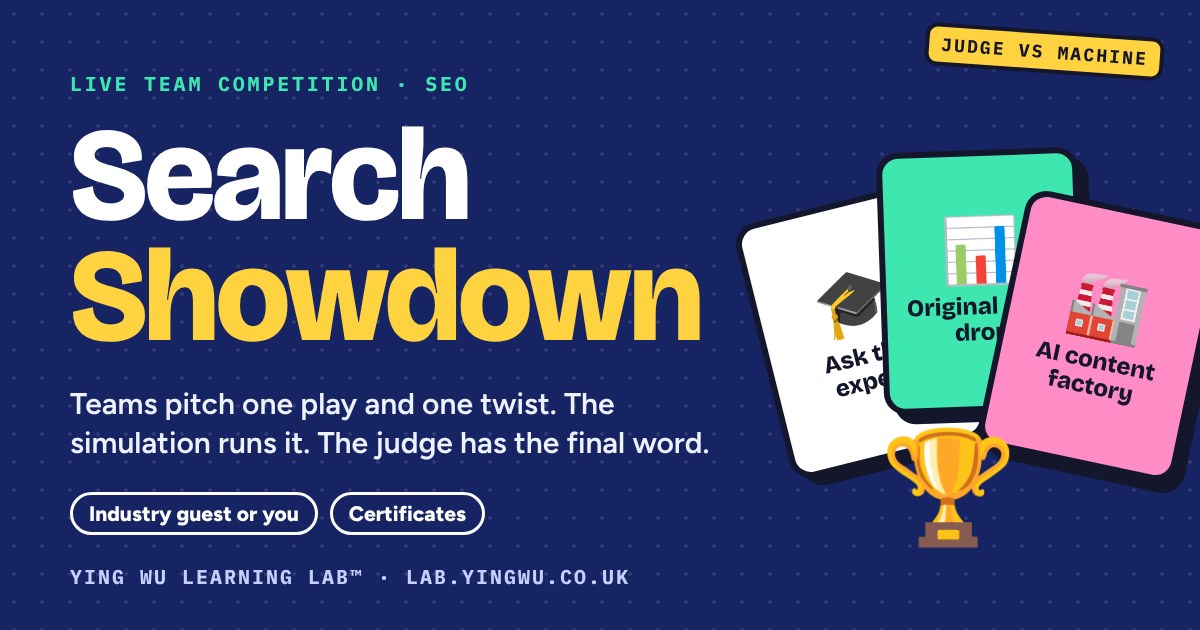
The live SEO pitch battle. Teams bet on search myths, then pitch one play and one twist for a real client brief from Pi Datametrics (or your own). The simulation shows how each idea fares in today’s search and AI answers, and a judge from industry (or you) gives the verdict. Certificates for the winners.
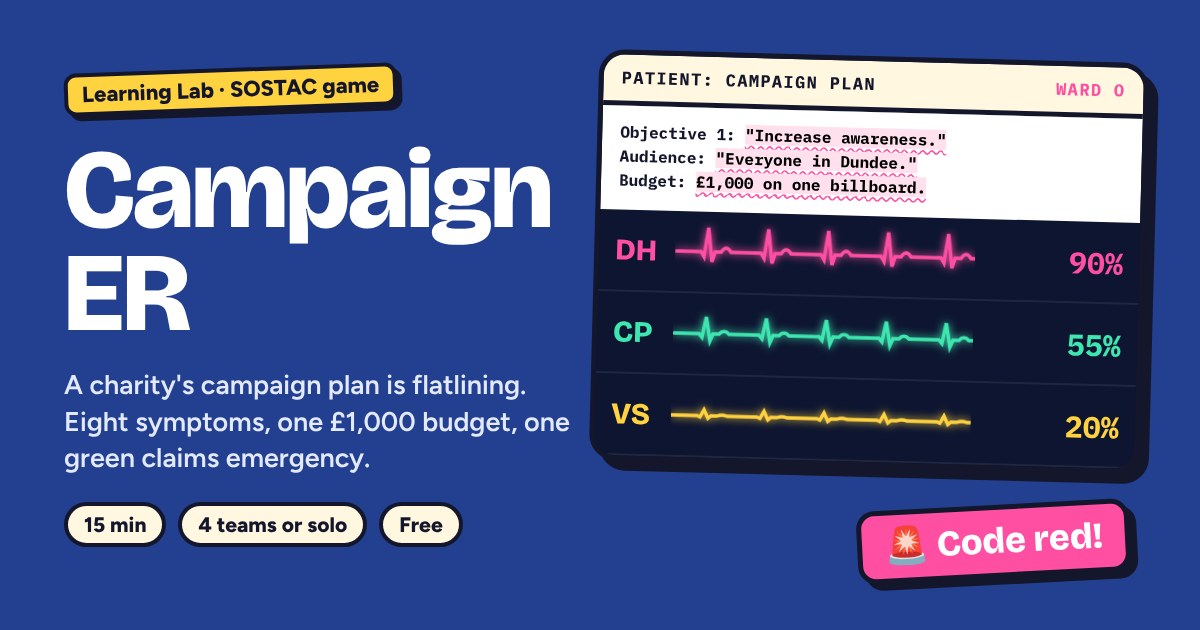
A charity's sustainability campaign plan is flatlining. Teams treat eight symptoms through SOSTAC, from SMART objectives to a £1,000 budget, then face a green claims emergency.
Live in class or solo20–35 min in class4 teams or just you
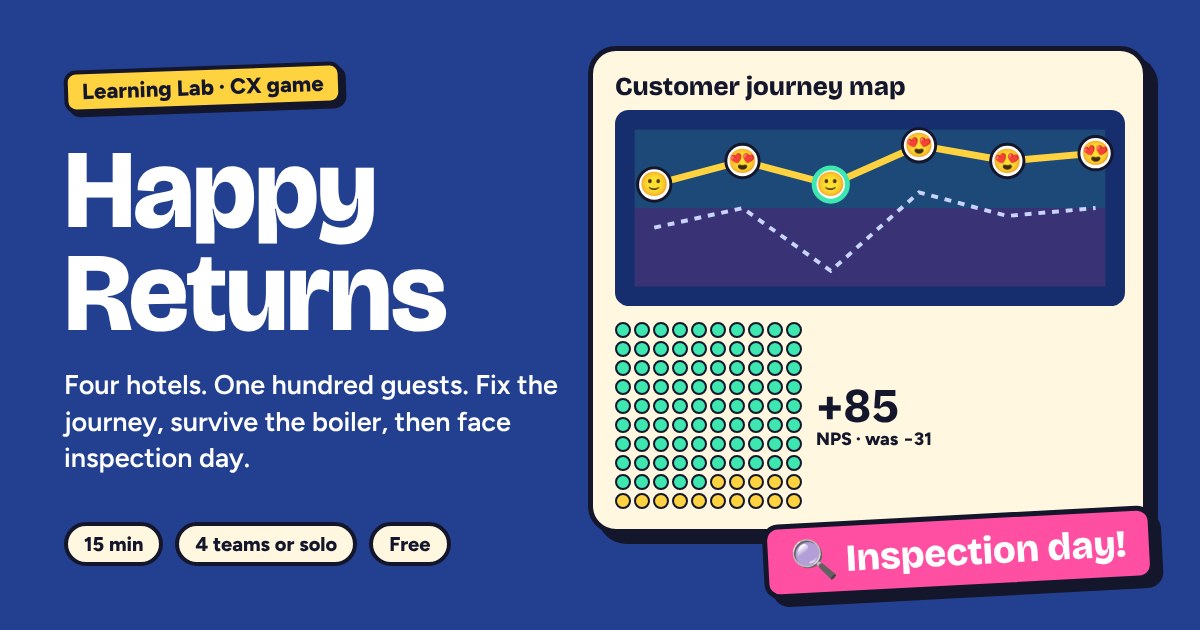
Four hotels fix their customer journey, survive a boiler failure, then head office surveys all 100 guests. Journey maps, pain points, service recovery and NPS.
Live in class or solo20–35 min in class4 teams or just you
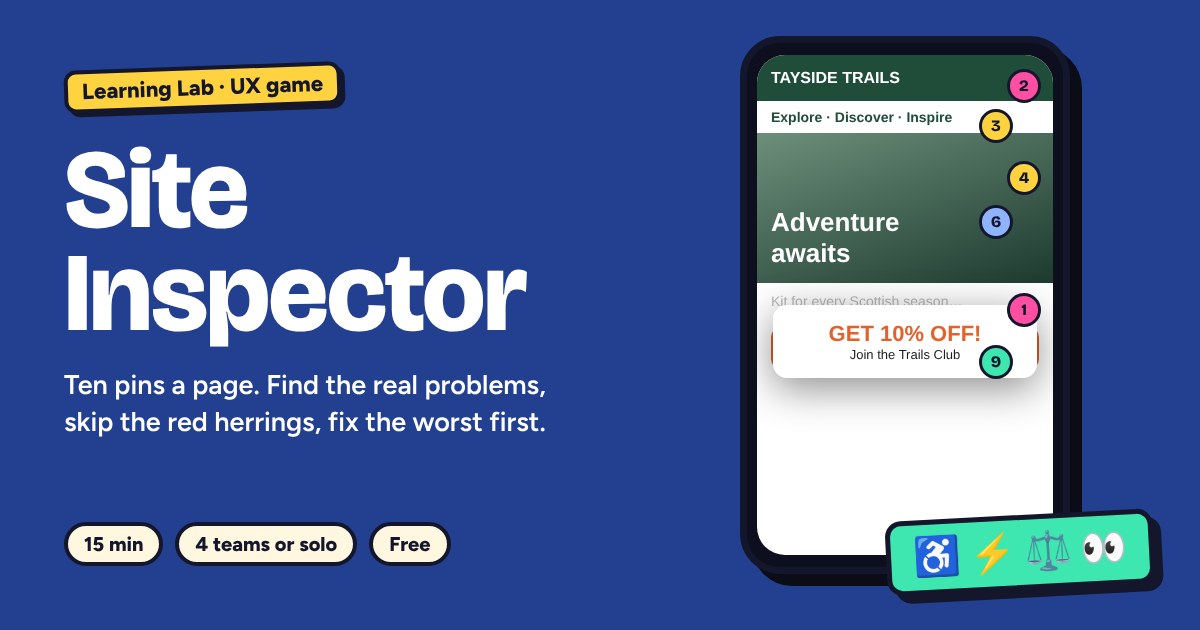
Audit a shop's home page, product page and checkout. Spot the real problems, skip the red herrings, then see the site through a slow phone, colour-blind eyes and a screen reader.
Live in class or solo20–35 min in class4 teams or just you
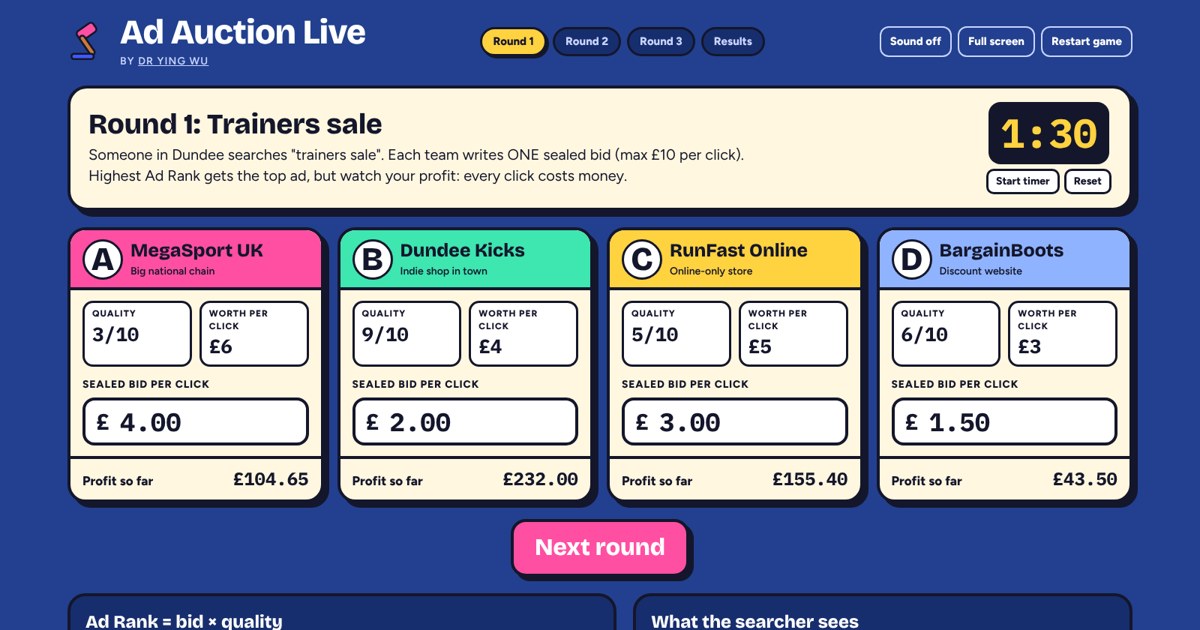
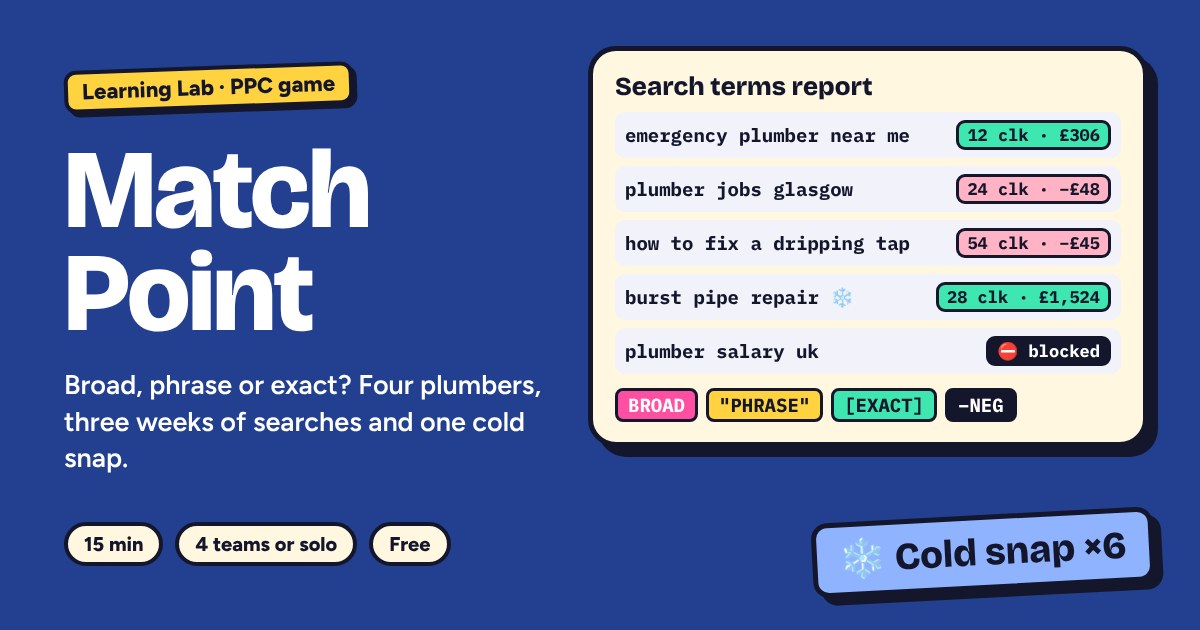
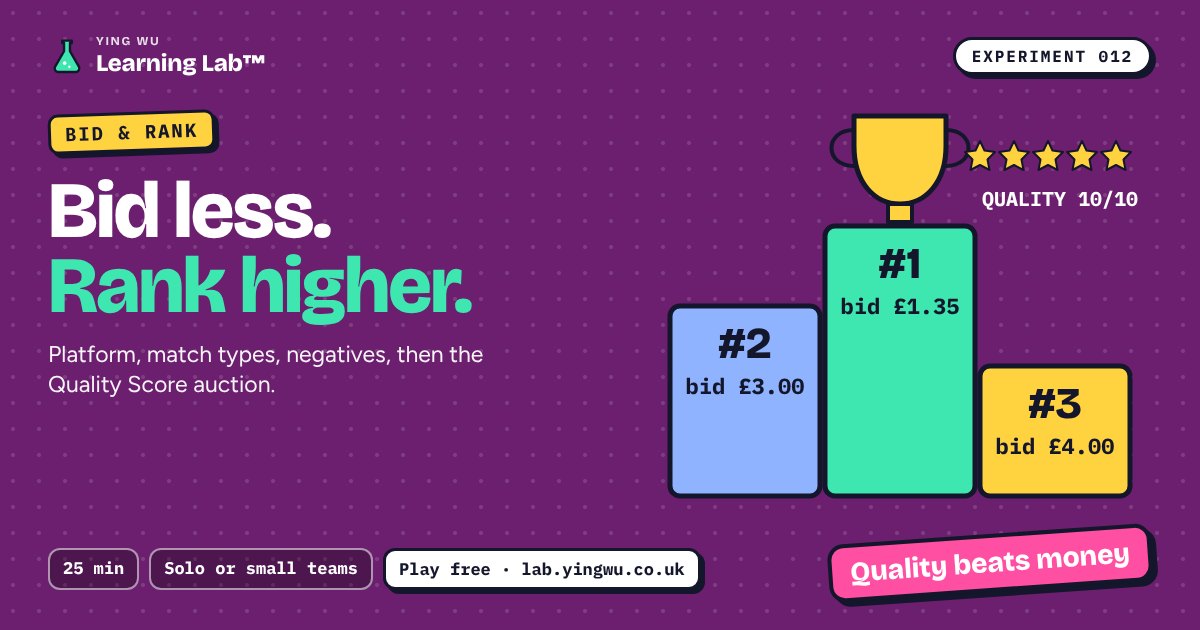
Four plumbers pick keywords and match types, read the search terms report, add negatives and choose an ad and landing page before a cold snap. Pairs with Ad Auction Live.
Live in class or solo20–35 min in class4 teams or just you
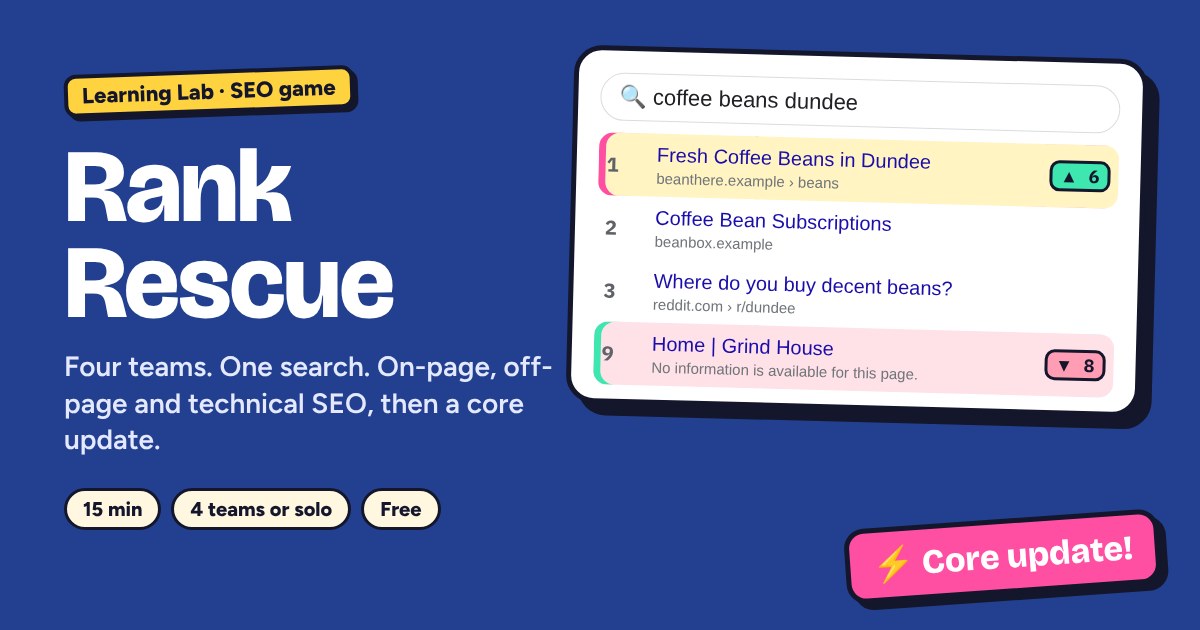
Run the paid search account for a Dundee running shop: pick the platform, set match types and negatives, win the ad auction without overpaying, then read the report. A full PPC lecture recap in one sitting.
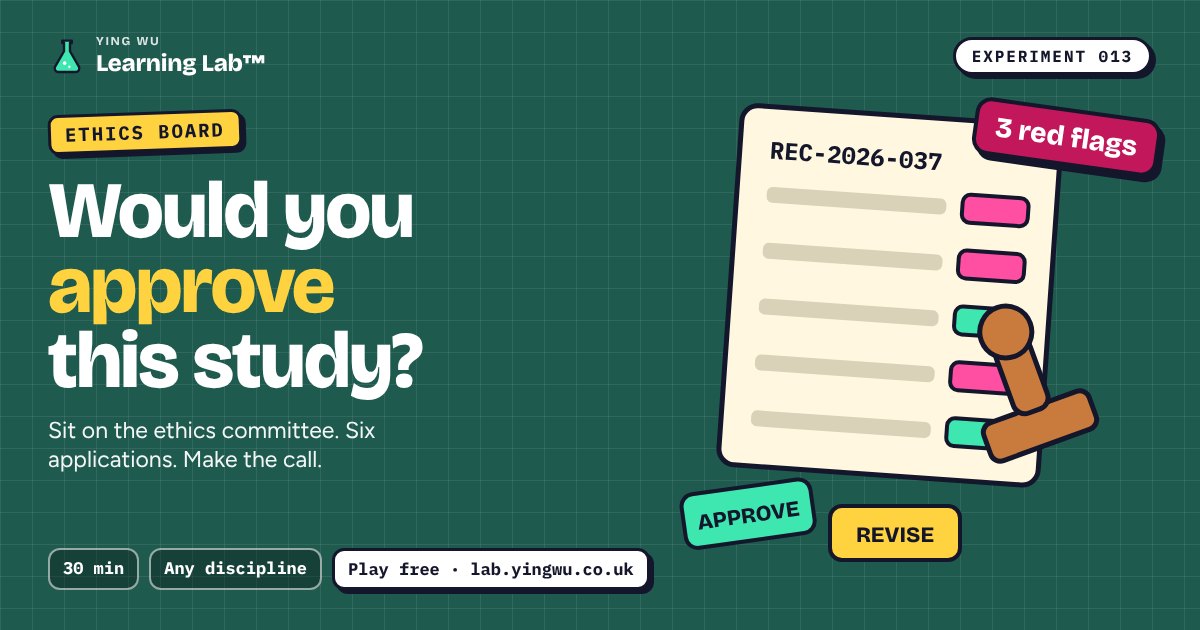
Sit on a university research ethics committee. Six applications from six disciplines: flag the issues, make the call, then see what the experienced members spotted. For research students in any subject.
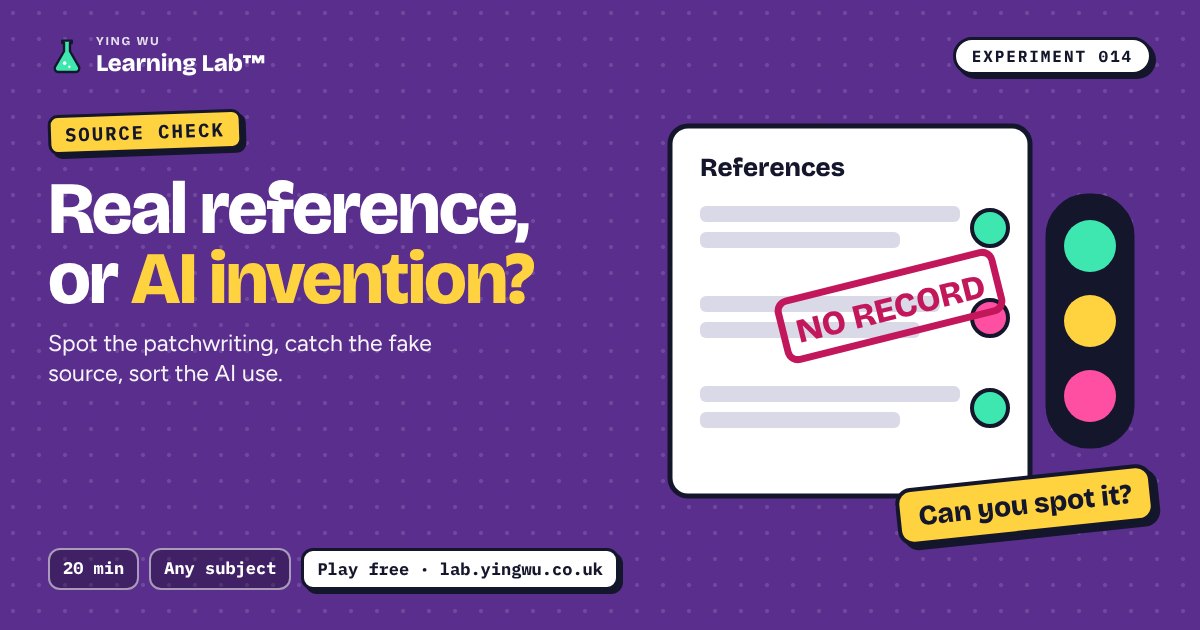
Paraphrase or plagiarism? Real reference or AI invention? Fine to use AI, or not? Three rounds on the habits that keep assessed work honest, for students in any subject.
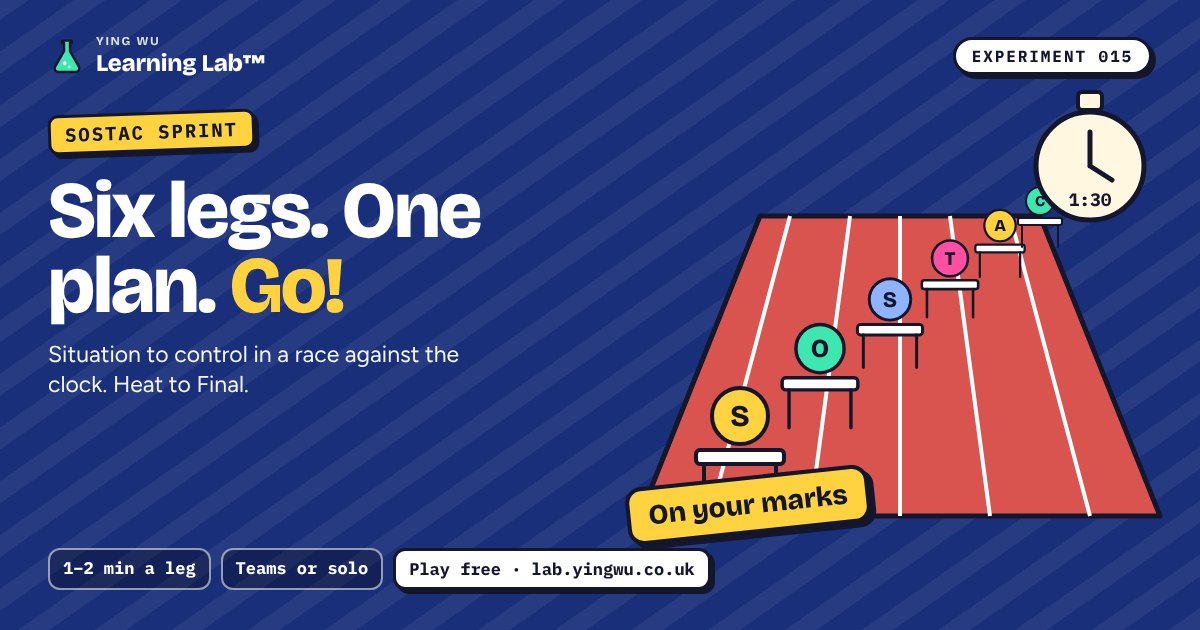
A relay race through a marketing plan. Each SOSTAC stage is a one-to-two-minute leg with two quick calls, so you can run a leg whenever your lecture reaches that stage, then carry on with your slides. Three levels: Heat, Semi-final and Final.
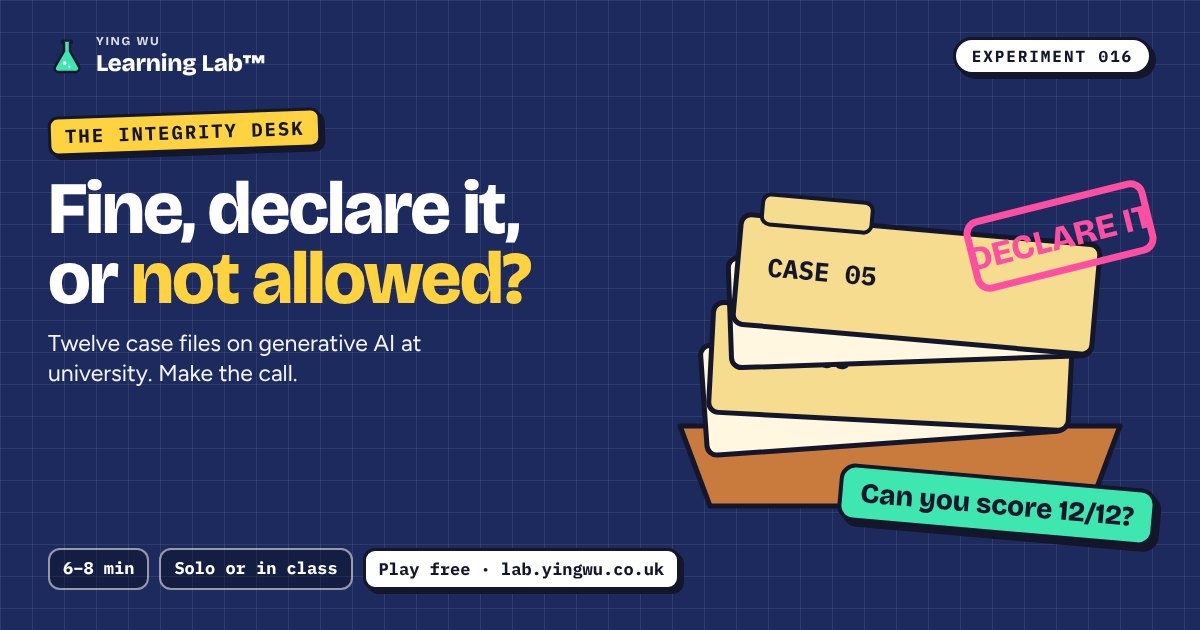
Twelve case files land on your desk: students and staff using generative AI at university. Read the brief, make the call, declare it and own it, then see what the University of Dundee AI policy says. Bonus: test your own AI on four of the same cases.
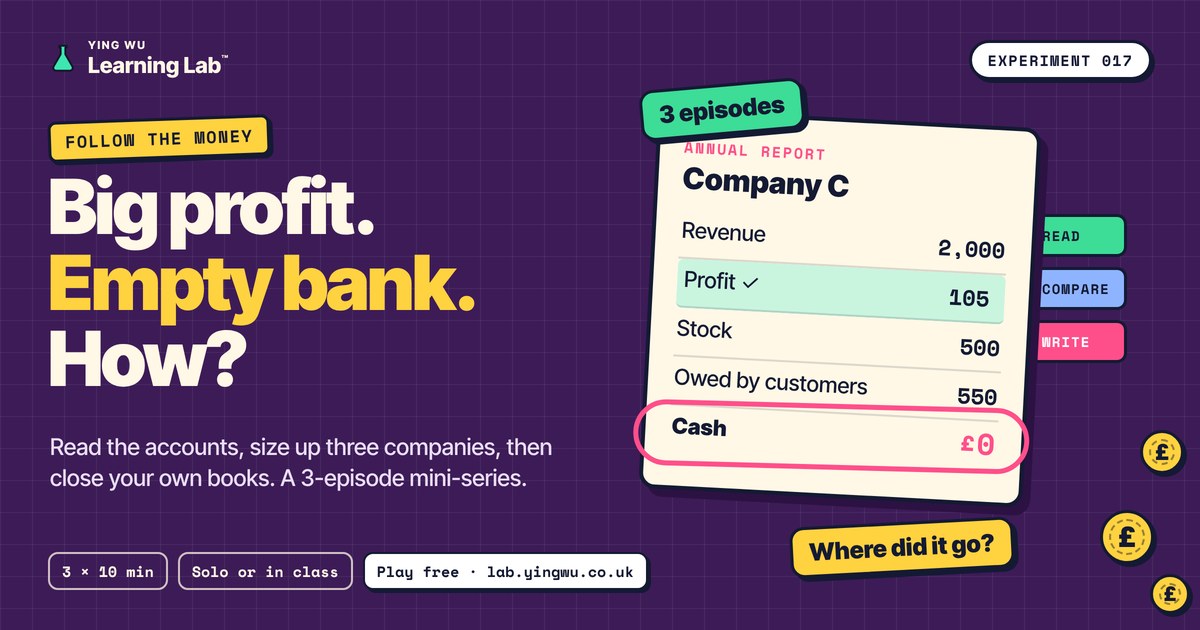
A three-episode mini-series on financial reports for people who aren't accountants. Read a company's accounts, size up three businesses as an investor, a bank and a job-hunter, then close the books on your own start-up and write its year-end report. Fictional companies, real skills.
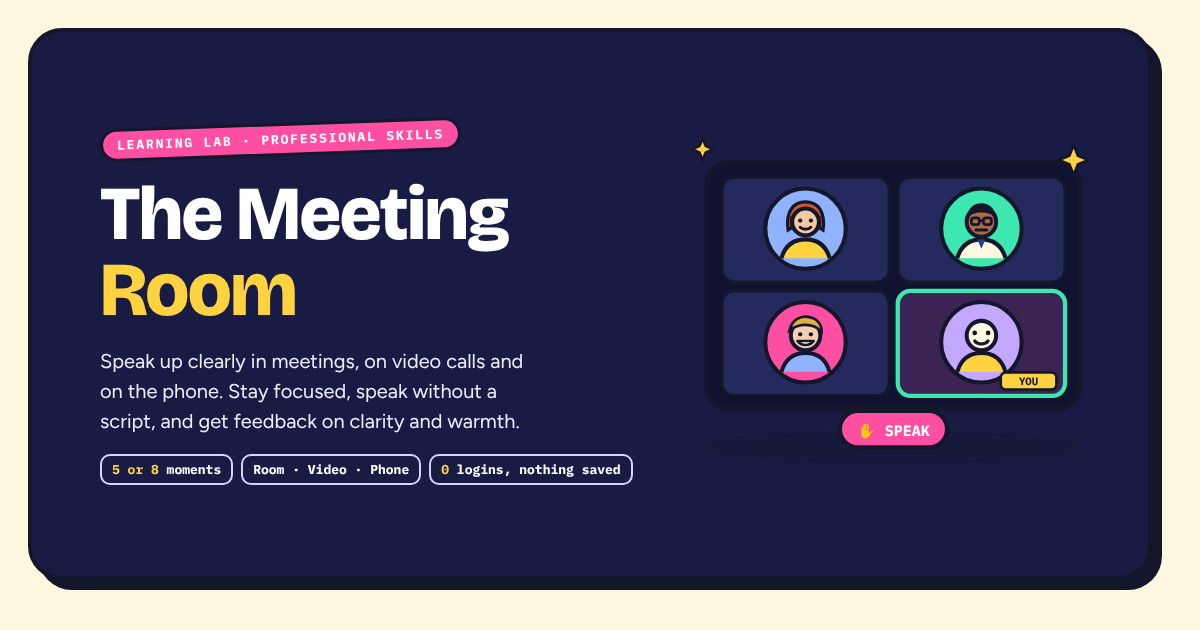
Speak up clearly in a live team meeting, on a video call or on the phone. Stay with the conversation, then give an update, disagree well, recover when you drift, hold the floor, say no kindly and sum up. Feedback on how clear and how warm you sounded.
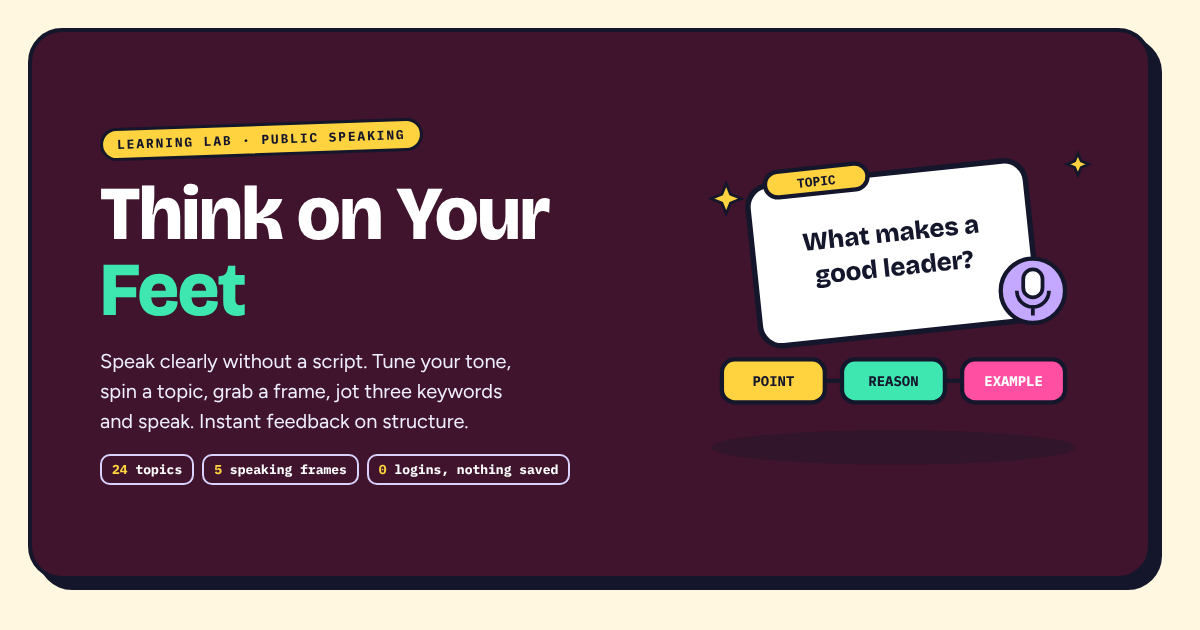
A speaking gym for when there is no script. Warm up with the Tone Tuner, spin a topic, pick a frame such as PREP, jot three keywords and speak. Instant feedback on structure, openings, endings and filler words.
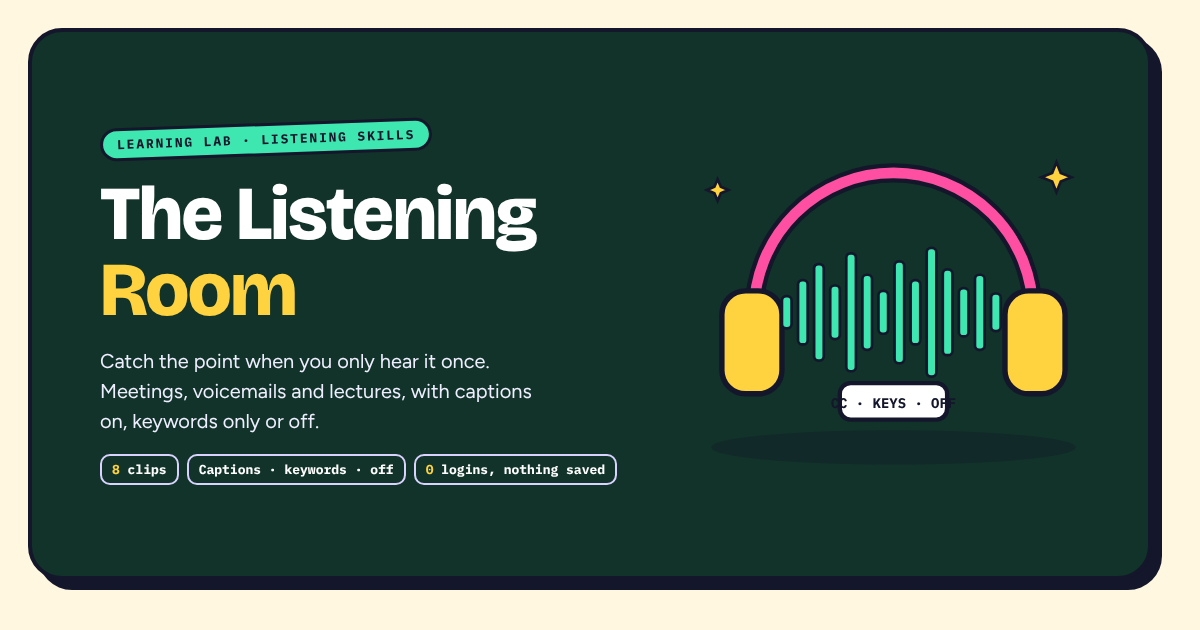
Catch the point when you only hear it once. Meetings, voicemails, client calls and lectures, with captions on, keywords only or off. Answer three quick questions, say it back in one sentence, then see where the point was hiding.
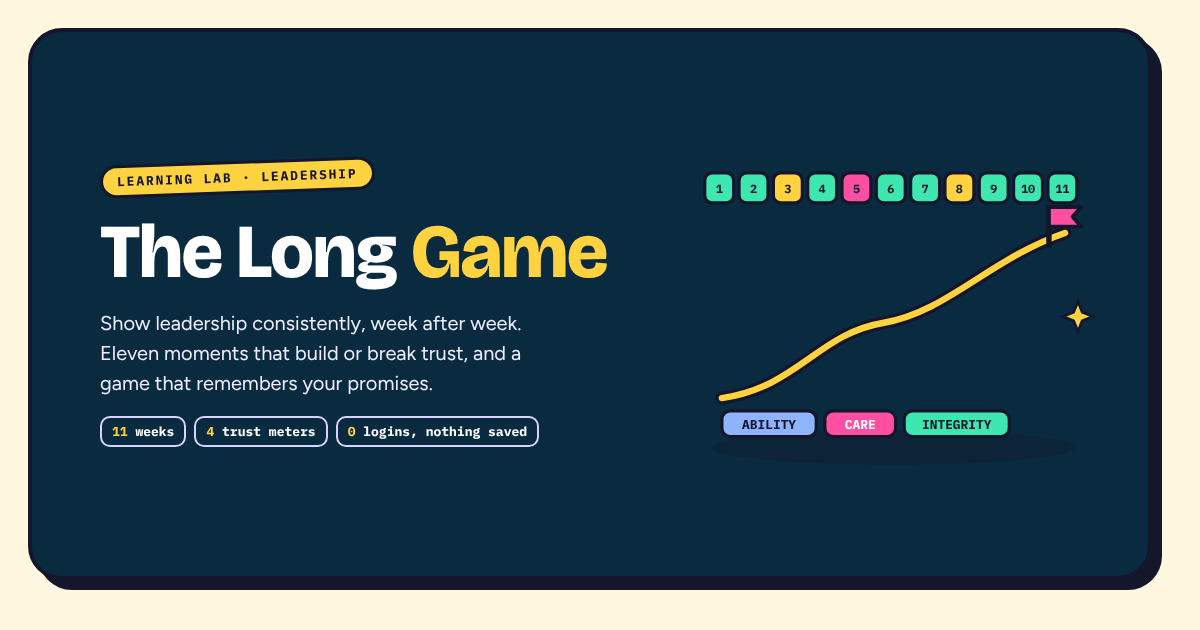
Show leadership consistently, week after week. Lead a team through a term or a whole year: a sceptical comment, a credit moment, a split decision, your own mistake, pressure from above. The game remembers your promises and scores how well your actions match your values.
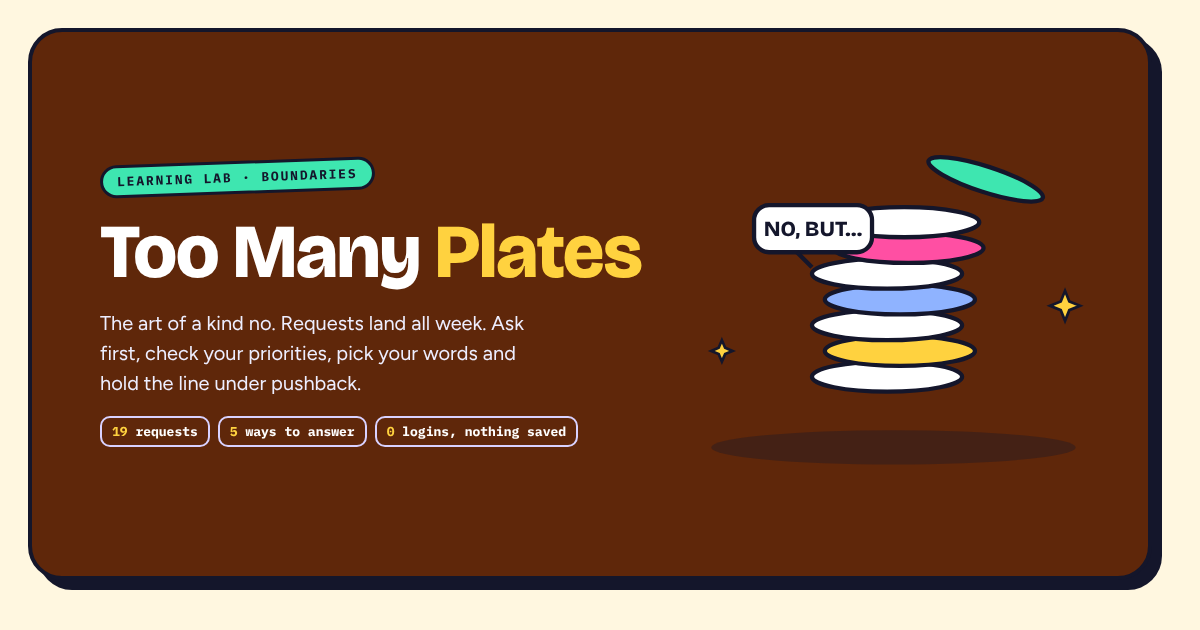
For anyone who says yes and regrets it by Wednesday. Requests land all week from your manager, colleagues, friends and family. Ask first, check your priorities, choose yes, yes if, not now, no but or no, pick your words, then hold the line when they push back.
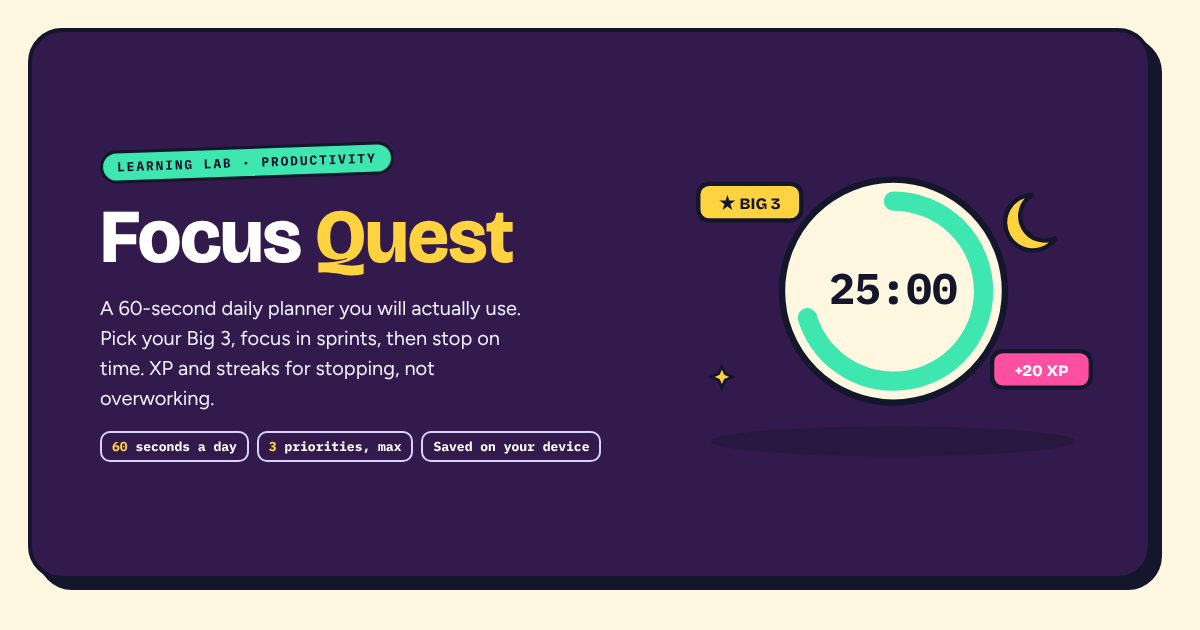
A 60-second daily planner you will actually use. Empty your head, sort in a tap, pick your Big 3, run focus sprints with a parking lot for stray thoughts, then shut down on time. XP and streaks reward stopping, not overworking. Saved only in your browser.
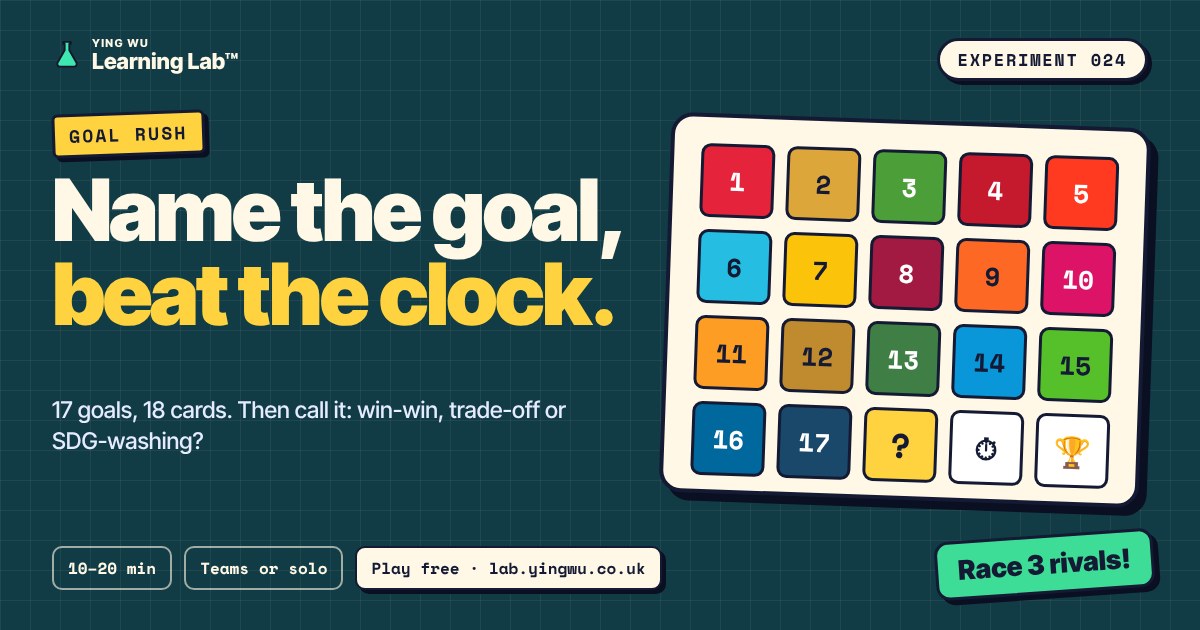
Know the 17 Sustainable Development Goals from their real UN targets, match business moves to the goals, then call it: win-win, trade-off or SDG-washing? Race three rivals solo, or play in teams.
Live in class or solo25–40 min in class · 8–15 solo2 to 6 teams or just you
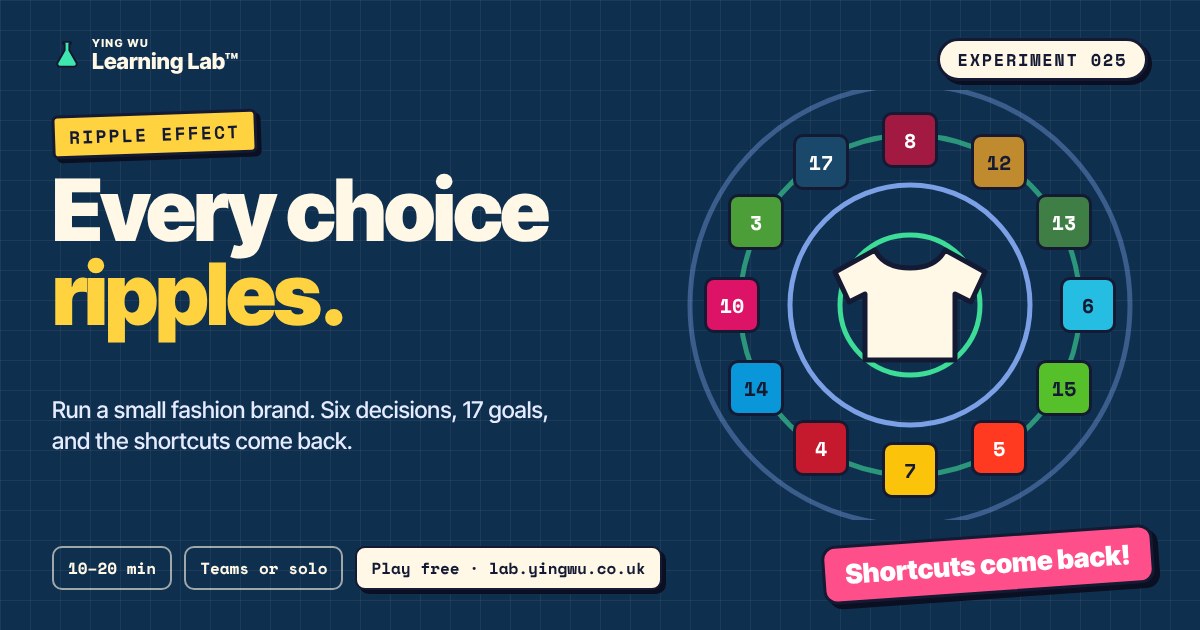
Run a small Dundee fashion brand through six decisions. Every choice ripples across the 17 goals, and the shortcuts come back. Find the win-wins and beat three rival brands, or play in teams.
Simulation25–40 min in class · 8–15 solo2 to 6 teams or just you
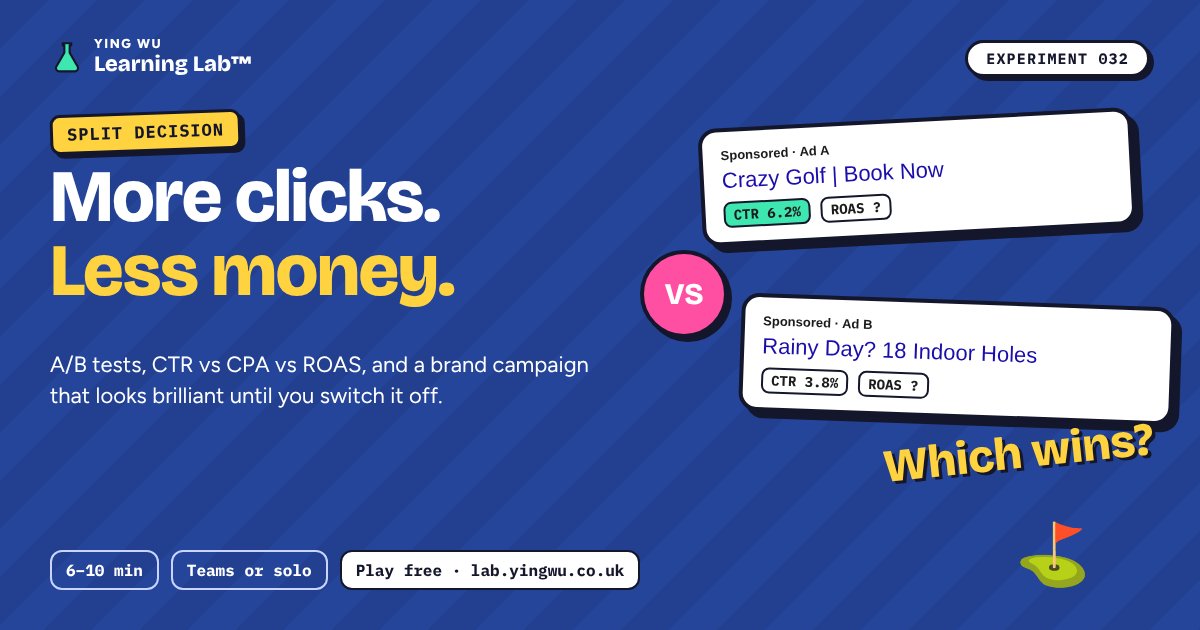
One ad wins the clicks, the other wins the bookings. Three quick decisions on measuring PPC: judge an A/B test, find the leak after the click, then test whether a 12× ROAS brand campaign really works. Putter trophies for the winners.
Live in class or soloAbout 5 min of play (6–10 in class)2 to 8 teams or just you
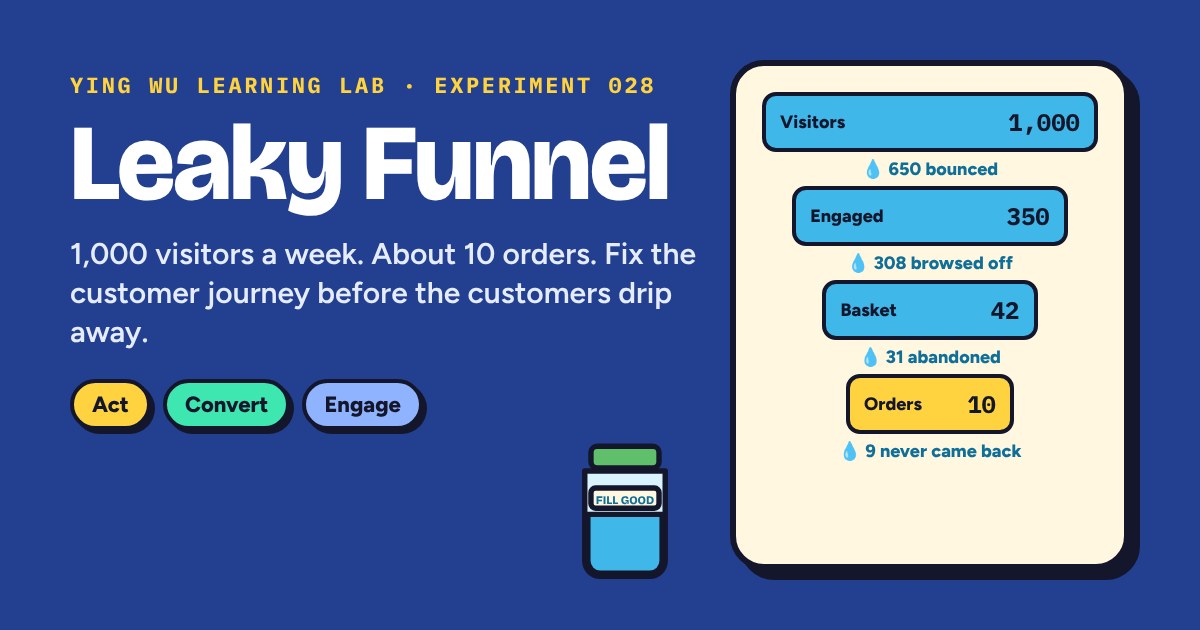
A refill shop's website gets 1,000 visitors a week and about 10 orders. Three mini-games: spot the leaks on the homepage, operate on the checkout, then decide which customer messages a bot or a person should answer. Spin a real-world twist wheel; jar trophies for the winners.
Live in class or soloAbout 15 min of play (15–25 in class)2 to 8 squads or just you
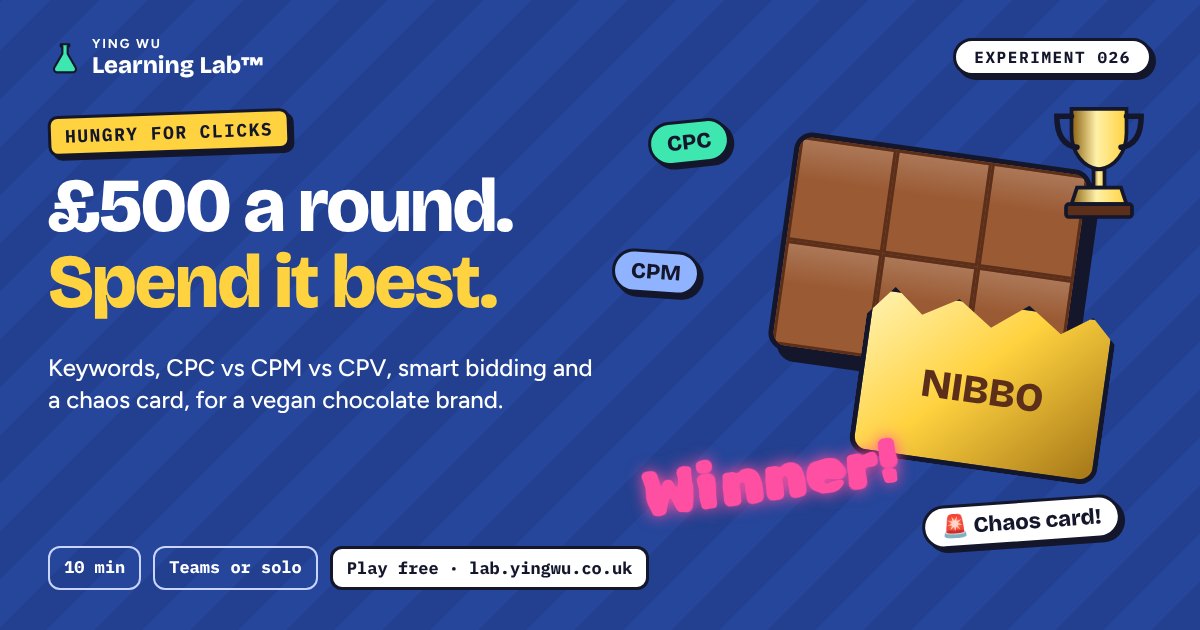
Rival PPC agencies spend £500 a round for a vegan chocolate brand: keywords, then CPC, CPM or CPV, then smart bidding before a chaos card hits. Shining stars, trophies and chocolate rain for the winners.
Live in class or solo15–25 min in class2 to 8 teams or just you
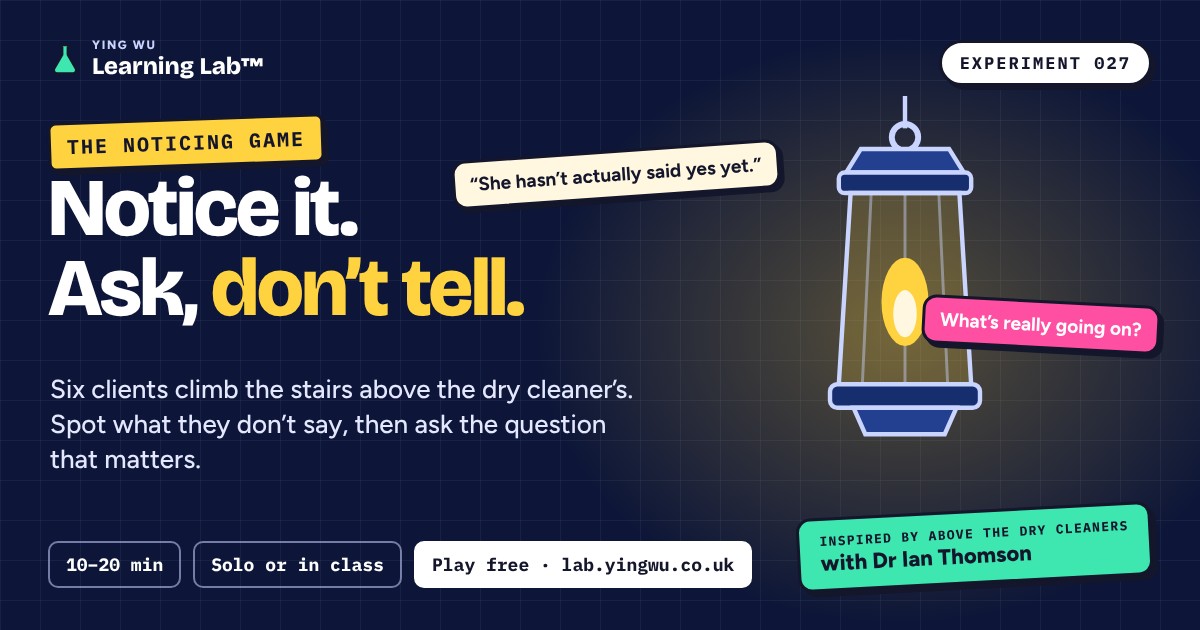
Six clients climb the stairs to an office above a dry cleaner’s with a question about tax, cash or growth. Notice what they don’t say, then ask, don’t tell. Made with Dr Ian Thomson, inspired by his book Above the Dry Cleaners.
Solo or in class10–20 minBusiness, accounting and leadership
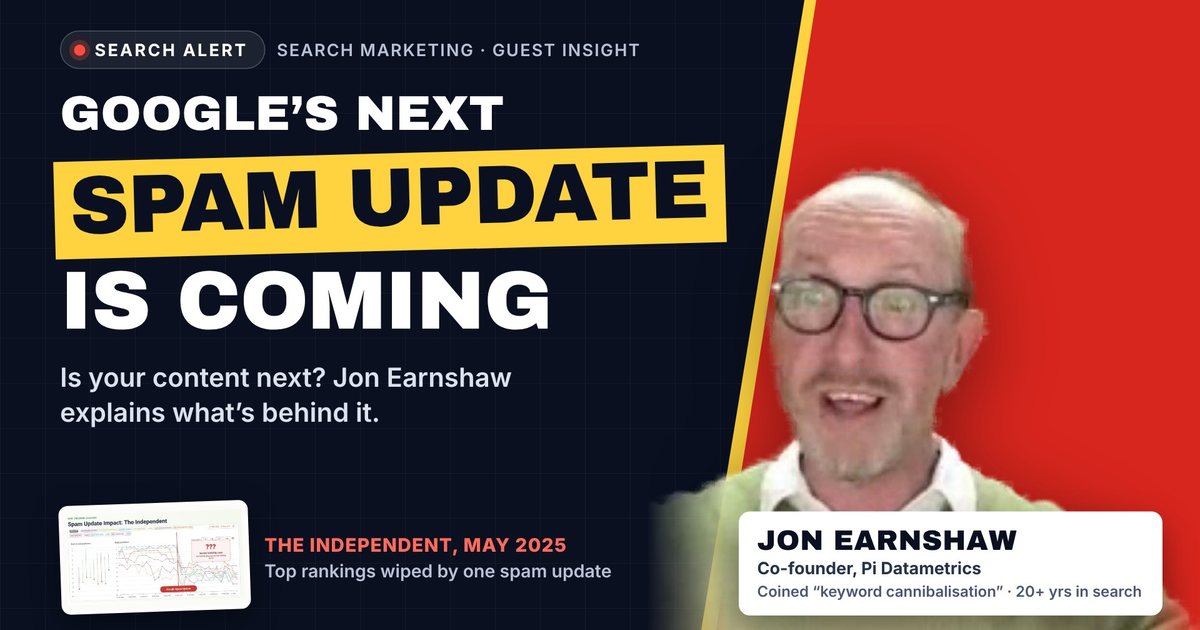
Industry insight from Jon Earnshaw of Pi Datametrics: Google's three spam rules, real ranking data, a Spam or legit? sorting task and seminar questions.
Video + activity30–45 min with the taskClass or solo
Small businesses and community organisations post real problems, case studies, guest talks and feedback panels. Take one on alone, with friends or with your class.
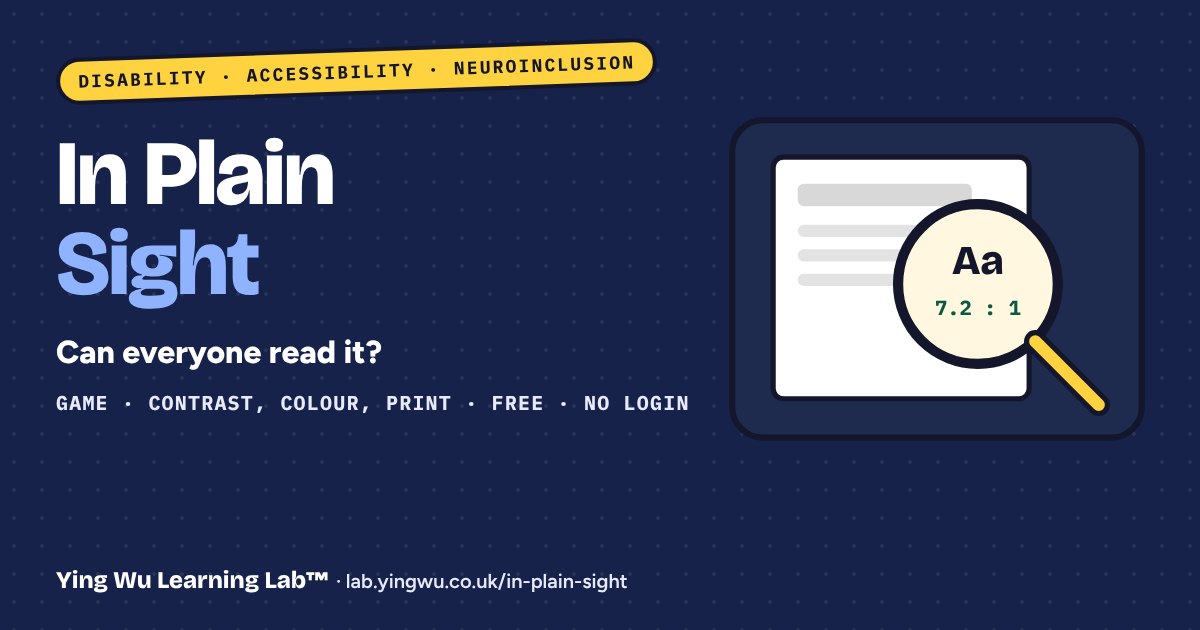
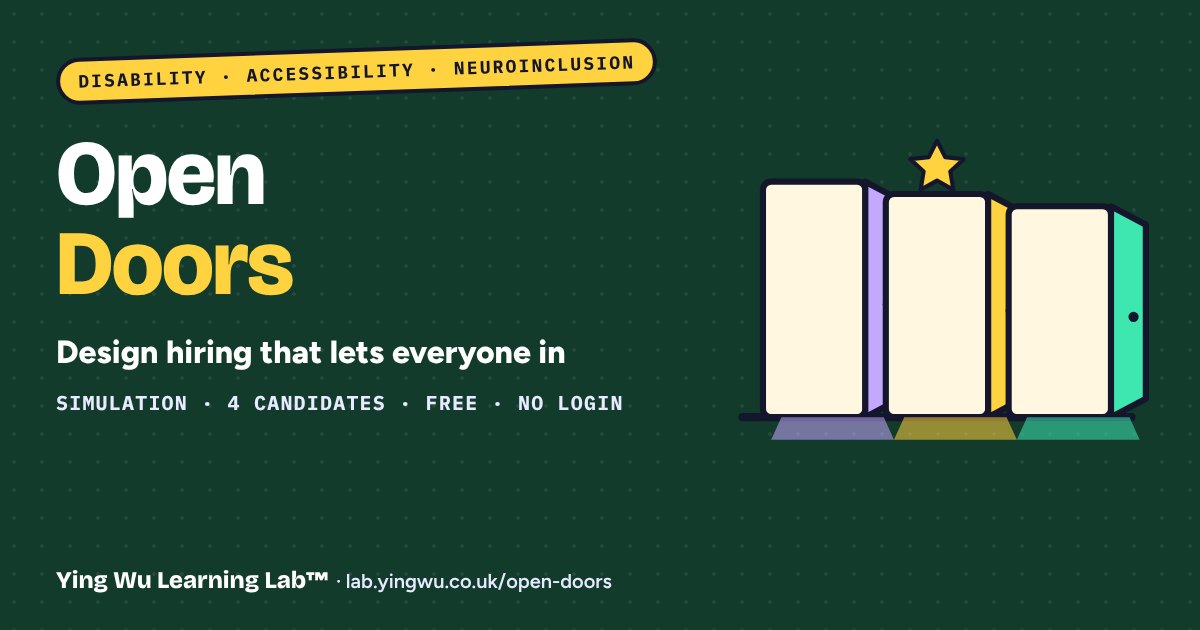
See beyond the visible, respond well to requests, open up a shop and an event, design hiring that lets everyone in, then make your designs and website work for everyone.
Play the games to earn stickers, then share them on LinkedIn or with your class. Saved only on this device: no account, no login, nothing sent anywhere.
Student voice
Lab results
What students say after playing. Their words, never rewritten: every Mentimeter comment on the class from Ad Auction Live, Rank Rescue and SOSTAC Sprint, a Biz-a-thon student on Bank the Unbanked, two postgraduate students on Greenwash Detective, and Master of Design students on Pretty Honest, plus reviewed star ratings from the games themselves.
Observation log · Search Marketing7 Oct 2026 · Ad Auction Live
I loveeeeee the lecturer, good class, bubbling spirit and engaging
6 responses6 shown0 editedAnonymous, via Mentimeter
SOSTAC Sprint
Its first class ever played it in a marketing lecture on SOSTAC and assessment, and four teams finished in a dead heat. At the end, I asked what they liked and what I could improve. Every answer, as typed.
Observation log · Marketing planning22 Oct 2026 · SOSTAC Sprint
Great class, lots of fun games to help us remember the lecture notes!
SMarketing student Anonymous Mentimeter response
Very interactive
Amazing class with interactive fun functions
I enjoyed how clearly the topics were explained and how engaging the lecture was. With games
Great interaction with students! Best doctor!
YOU ARE THE BEST!!
7 responses6 shown0 edited1 left out: a birthday wish, not about the classAnonymous, via Mentimeter
Bank the Unbanked
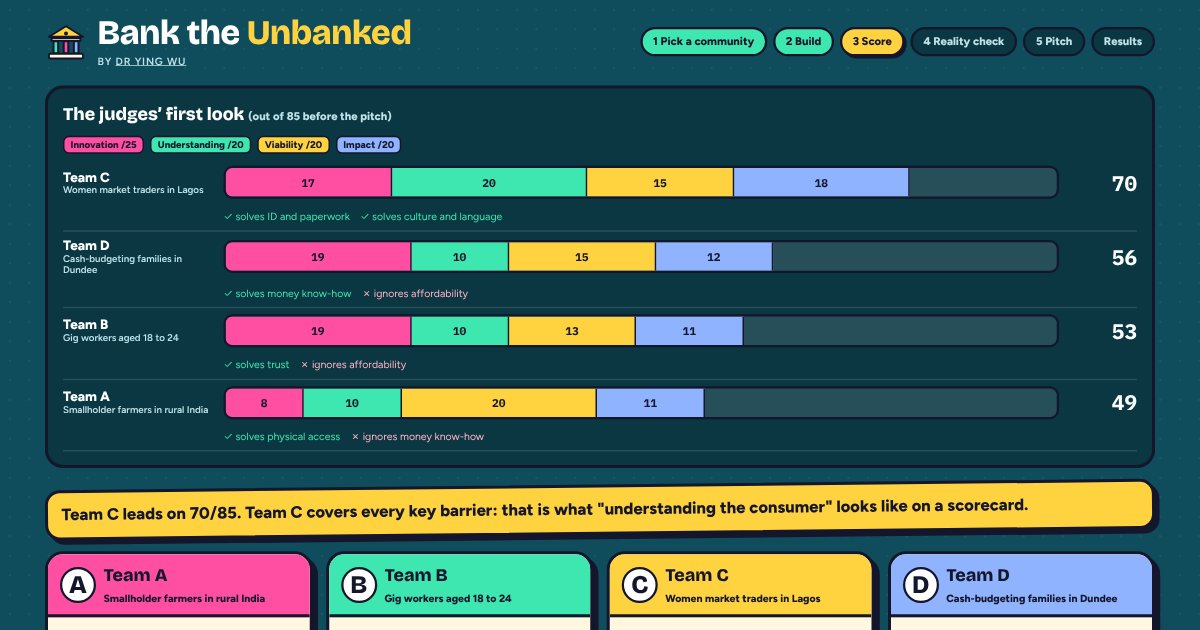
We played it before teams pitched at the NCR Atleos Biz-a-thon. Afterwards, I asked one student whether it helped.
Observation log · Biz-a-thonOct 2026 · Bank the Unbanked
People don’t trust banks. And you’d be like, how to improve their trust, and it can be used in the project as well.
BUndergraduate student Biz-a-thon participant
Before the presentation, it helped me because it was relevant to the topic
And it’s real life examples
Honestly, I think it’s brilliant
It’s amazing that you can put as many people as you can, like the teams
Two senior professionals studying on an international sustainability module: a business school professor who chairs a centre at her institute, and the founder and CEO of an award-winning brand and marketing company. One scored a perfect 12/12, then ran the game with 180 of her own students. Their words, from a written comment and a group call.
It is fantastic game. I even used it with my students in my class.
PBusiness school professor and centre chair Written comment after a perfect 12/12
In 3 sections, 180 students… they loved itOn running it with 3 of her own classes
They really loved it
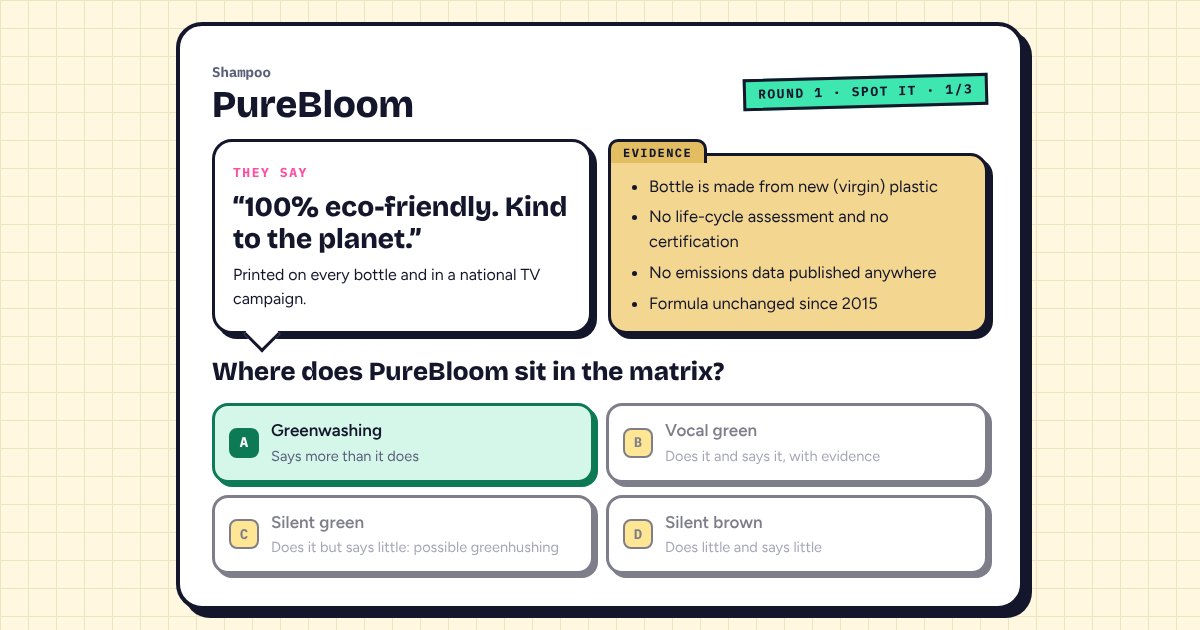
The case that surprised me most was how silent green (greenhushing) is also not good because it is downplaying your efforts
Spent the whole weekend into it and already told my team, like: “You guys have to go through this as well”Founder and CEO of an award-winning marketing company
Can you please send me the data to actually validate that claim and under which criteria can I use that name?What she asked a supplier the day before
That’s also a concrete example of what I’ve learned
2 students7 lines shown0 rewordedFillers trimmed · written and spoken feedbackShared with permission
Pretty Honest
I made it for a guest lecture with Master of Design students, and teams played for the trophy. At the end, I asked what they thought. Their words, recorded with their permission and shared anonymously.
I thought it was engaging, and it’s fun to test the things that we’re learning.
DMaster of Design student Spoken feedback after the game
It was loads of funFrom a trophy winner
It was easy to use
It was interactive and it was educational
The game is very interactive. Get to understand how business is being controlled and also give you a better insight on how to start as a leader or anywhere else
It’s very thoughtful for a designer to consider all the factors they need to pay attention to
Star ratings players leave at the end of a game, from 30 October 2026. I read every one, share them whatever the score, keep comments exactly as typed and reply with thanks and what I’ll do next. A big thank-you to everyone who rated the games during the pilot before then: your feedback has already shaped the updated games, so those earlier ratings stay behind the scenes.
Average ratingSince 30 Oct 2026
–
On the shelf
On the shelf
New experiments go up here as I build them. Pop back, or follow @learninglab.yingwu on Instagram to hear when the next one is out.
Ready
Toolkits
Now on the shelf: the Strategy Toolkit. Twelve established tools in easy, medium and complex levels, with examples, templates and references.
Real problems, case studies, guest talks and feedback panels from small businesses and community organisations, for classes, challenge days and portfolios. Career-ready posts are brewing too.
Quick, shareable explainers on search, AI and digital marketing, with the latest data and sources. First up: Google's next spam update, with industry insight from Jon Earnshaw.
Students, graduates and professionals: every game and simulation works solo, on your phone or laptop. No sign-ups, nothing to install, and nothing you type is sent anywhere.
Pick
Browse by category, follow a learning path, or press “Surprise me”.
Play solo
Press “Play solo” on any card. Every game works on your own, on a phone or laptop. Solo times are on each card: from about 8 minutes to about 35, depending on the game and how long you spend reading and reflecting.
Reflect
Each game ends with a debrief and tips. Copy your notes before you leave.
Collect
Earn a badge for each game, saved on your device, and share it if you like.
Do I need a guide? No. Every game explains itself as you play, with instructions on screen and a debrief at the end. But every game also has a learner guide: how to play on your own, pro moves, a pocket card to screenshot, quick fixes, and an Inclusive by design section. That section shows the support built into each game, such as read aloud, captions, no clock, keyboard use and numbers in words, and who each one helps.
Everything here runs in a browser. No sign-ups, no apps, no student data collected.
Open
Load the game on the classroom screen. It works offline once loaded.
Team up
Split the room into teams. Paper and pens are all they need.
Play
Type in their choices and let the reveal do the teaching.
Debrief
Use the built-in questions to link the game back to theory.
🌍
Teaching responsible management or the SDGs?
Games that work on a Sustainable Development Goal are tagged with it, and each tag names the UN target it covers, so you can filter the library by goal. Everything in the Lab also supports Goal 4, Quality education (target 4.4: relevant skills for employment, decent jobs and entrepreneurship), so Goal 4 shows the whole library. Start with the Responsible business and the SDGs path: five games in about an hour, from learning the 17 goals to making real trade-offs. They're built on playful learning: meaningful, joyful, socially interactive, actively engaging and iterative, the five characteristics in PRME's Impactful Five (i5).
One minute, six quick questions. It shows me where the games make a difference and how to improve them.
Behind the Lab
Made by Dr Ying Wu
I design and build these games independently, in my own time, test them with students in real classes, and write about what happens on my website. My day job is Director of MBA and DBA Programmes at the University of Dundee School of Business.